
How did today’s Jains shamelessly become defenders of the caste system?
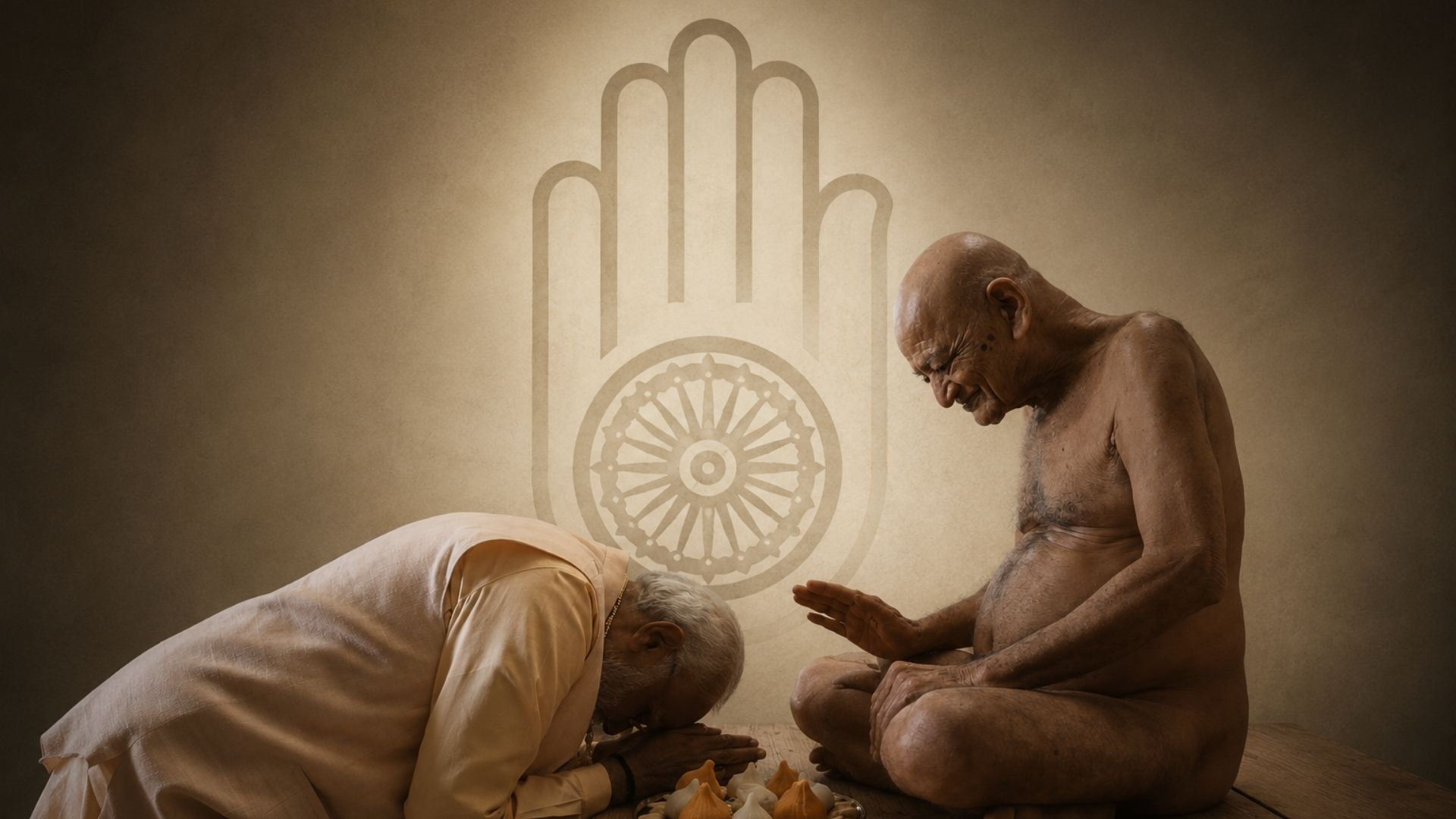
Jainism emerged from the Shramana tradition as a challenge to the religious order of its time. It rejected Vedic sacrificial practices and questioned the idea that spiritual worth should be determined by birth. At least philosophically, ethical conduct and ascetic discipline mattered more than hereditary status.
But somewhere along the way, the challenge to hierarchy became an accommodation with it.
Over centuries, Jain social organisation absorbed many of the structures surrounding it. Medieval Jain texts incorporated varna into their social imagination, hereditary ritual roles emerged, and communities became divided into numerous jatis and sub-castes. Marriage remained tightly controlled through endogamy, ensuring that social status and family lineage stayed protected.
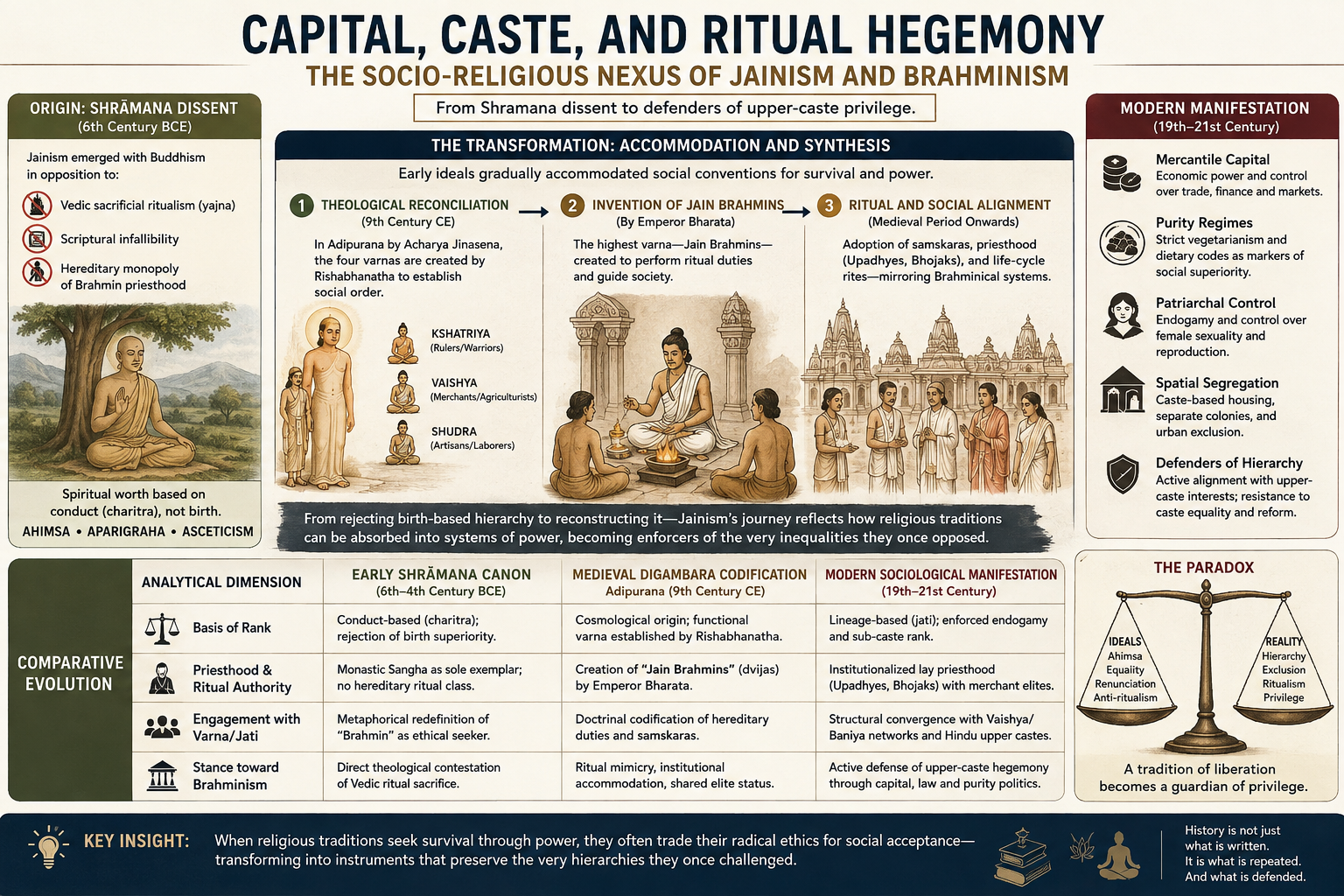
The transformation illustrated above is important because it did not remain confined to history. The same broad structures can still be seen in contemporary social life, from matrimonial boundaries and community-controlled networks to the policing of food, space and social belonging.
The question becomes particularly uncomfortable when purity is no longer just a personal religious practice. When vegetarianism becomes a criterion for deciding who can live in a neighbourhood, when food habits are used to stigmatise communities, or when religious demands collide with the livelihoods and cultural practices of marginalised groups, purity begins to function as a mechanism of social power.
This is where today's Jains need to confront an uncomfortable contradiction. A community cannot endlessly celebrate its history of challenging Brahminical authority while refusing to examine the caste structures that continue to exist within and around it.
Rejecting the Vedas did not automatically mean rejecting caste. And opposing Brahmin priests did not automatically mean opposing Brahminism as a system of graded hierarchy.
The question is not whether Jain philosophy is identical to Hinduism. It clearly is not.
The question is whether, in everyday social practice, today's Jain elite have become so comfortable with caste, hierarchy and exclusion that they now help preserve the very social order their tradition was once expected to challenge.
And if the answer is yes, then silence is not neutrality.
It is complicity.
Liked this story?
Discover more voices from the Dalit storytelling archive, reflections, struggles, and steps to transform our future.
Browse all storiesPass it forward
Know someone who needs stories like this? Bring them into the movement through our Referral Circle.
 Join the Referral Circle