
Talk to Babasaheb
Ask him questions directly. He responds based on his actual writings and speeches.
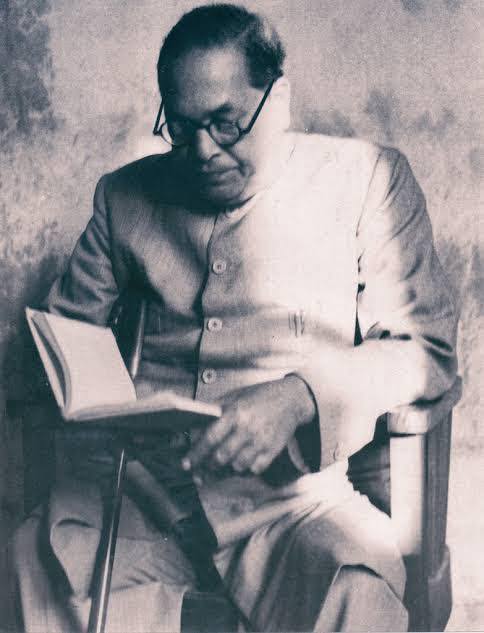
Dr. Ambedkar wrote the roadmap. This platform builds the tools to walk it. Read every word he wrote. Ask him directly.
What you can do here
Everything on this platform exists because Babasaheb fought for it first.
Ask him questions directly. He responds based on his actual writings and speeches.
Caste explained interactively. 5 slide decks on his most important ideas.
17 volumes. Every word indexed. Search any topic, jump to the exact page.
Build your career ladder modelled on his own journey from Mhow to the Constitution.
He did it in 1927. Symbolically relive the most defiant act in Dalit history.
Faced discrimination? Ask Babasaheb how the Constitution protects you.
Important Revelations
Complex ideas made clear. Tap any card to explore.
How caste came to be — origin, mechanism, and why it persists.
Questions Hinduism cannot answer — Babasaheb's most unsettling inquiry.
The 1936 speech so explosive the host cancelled it. The most important thing he ever wrote.
His final work. Why he chose Buddhism. What liberation means.
How the fourth varna was created — and what it reveals about caste.
25 December 1927 · Nagpur
On Christmas Day 1927, Dr. Ambedkar publicly burned the Manusmriti — the ancient Hindu text that codified caste hierarchy and prescribed brutal punishment for Dalits who dared to learn or aspire. The most symbolic act of defiance in modern Indian history.
His Work
New to his writings? Start here.
Annihilation of Caste → Who Were the Shudras? → The Buddha and His Dhamma → States and Minorities
Volume
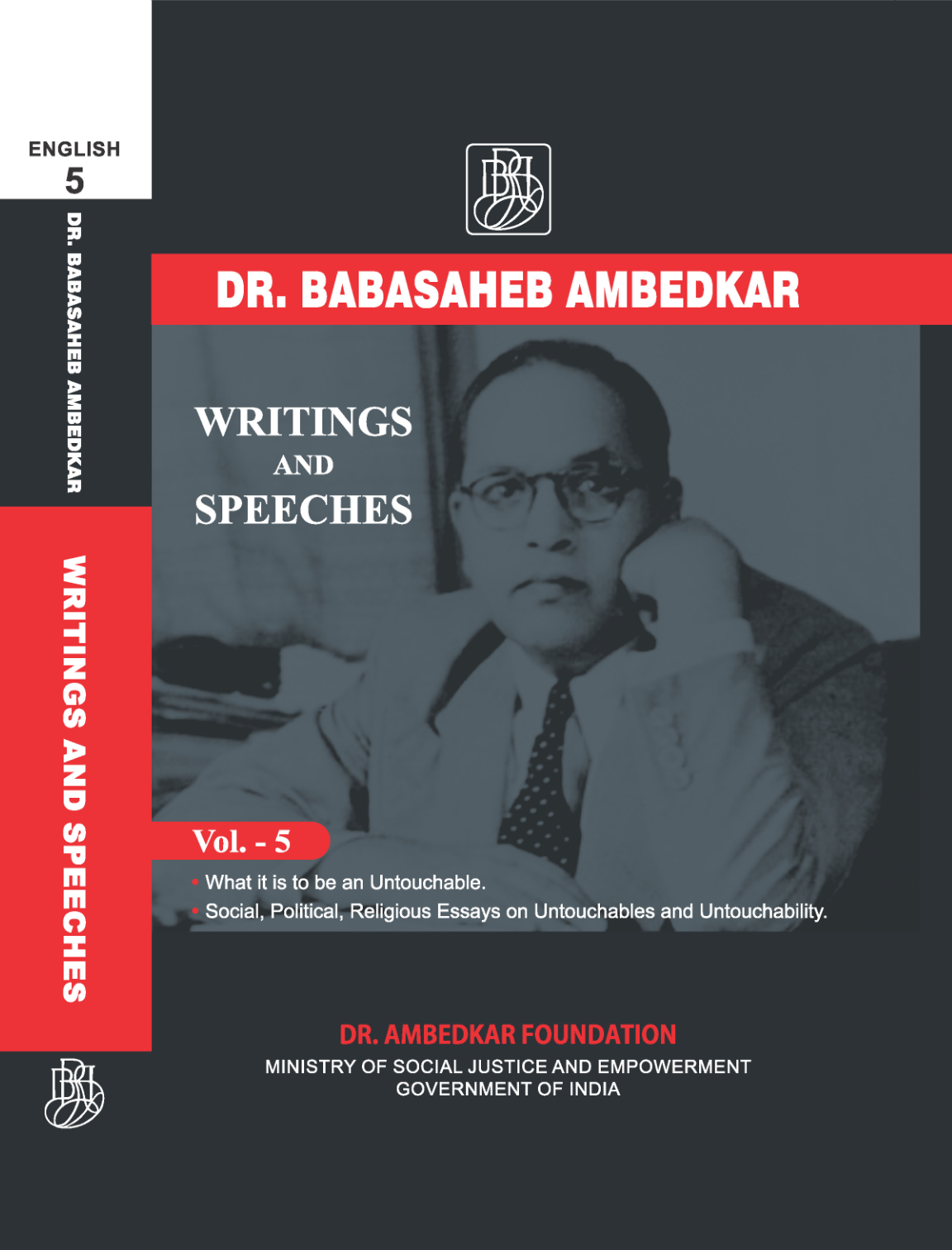
Volume 5 of Dr. Babasaheb Ambedkar: Writings and Speeches brings together Ambedkar’s addresses, notes, and writings from 1937 to 1941, a period marked by intense debates over constitutional reforms, labour rights, and the political future of the Depressed Classes. This collection highlights Ambedkar’s evolving political strategy as he sought to secure not only the social liberation of Dalits but also their rightful place in India’s democratic framework. A central theme of this volume is Ambedkar’s advocacy for labour and economic justice. Through speeches in the Bombay Legislative Assembly and Labour Conferences, he pressed for minimum wages, better working conditions, and state responsibility in protecting workers’ interests. His vision placed labour at the heart of nation-building, showing that economic democracy was as vital as political independence. Another major thread is his fight for political safeguards for the Depressed Classes. Ambedkar argued that without separate electorates, reservations, and special representation, Dalits would remain voiceless in the political system dominated by upper castes. His writings also reveal sharp critiques of the Congress and Gandhi, whom he accused of paying lip service to social reform while ignoring caste oppression. The volume also reflects Ambedkar’s legal and constitutional thinking. He examined the functioning of provincial governments under the Government of India Act, 1935, and exposed their failure to address minority and labour concerns. His speeches and writings reveal his insistence on a just constitutional order that prevents majoritarian dominance and ensures protection for vulnerable groups. In addition, the volume captures Ambedkar’s work as a social reformer and public intellectual. He stressed education, self-respect, and organization among the Dalits, calling for a cultural and spiritual awakening that would challenge Hindu orthodoxy. His criticism of untouchability, caste discrimination, and the Hindu social order underscored his conviction that true freedom was impossible without annihilating caste. Overall, Volume 5 portrays Ambedkar as a multifaceted leader—a labour advocate, constitutional thinker, and relentless critic of caste injustice. It shows his deep commitment to linking the struggles of workers and Dalits, while laying the groundwork for a future where liberty, equality, and fraternity would define Indian democracy.
Volume
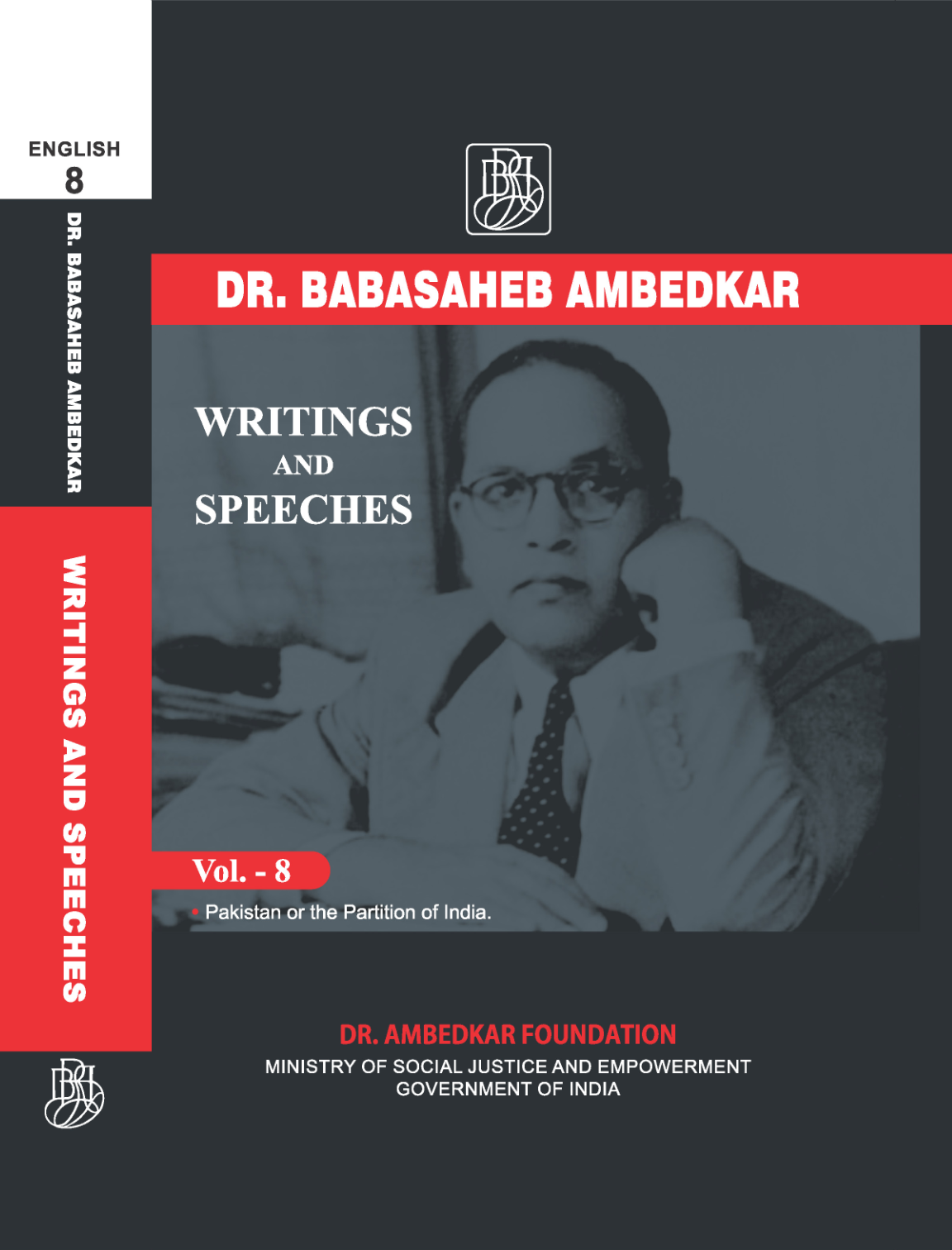
Volume 8 of Dr. Babasaheb Ambedkar: Writings and Speeches is devoted almost entirely to Ambedkar’s seminal work “Pakistan or the Partition of India” (first published in 1940, revised in 1945). This volume is a comprehensive exploration of the communal problem in India and Ambedkar’s analysis of the demand for Pakistan raised by the Muslim League. Ambedkar begins by critically examining the Hindu–Muslim problem, tracing its roots to historical, religious, and cultural differences. He highlights the fundamental incompatibility between Hindu and Muslim social systems, arguing that India’s communal divide is not just political but deeply social. His analysis rejects simplistic calls for Hindu–Muslim unity and insists on addressing the realities of conflict. In this volume, Ambedkar also analyzes the case for Pakistan in detail. He studies Muslim League’s arguments, the demographic and geographical factors, and the feasibility of partition. He acknowledges that while partition would be painful, it might also be a practical solution to avoid perpetual conflict and ensure political stability. At the same time, he points out the dangers, costs, and complexities of dividing India. Another central theme is Ambedkar’s criticism of the Congress and Gandhi for their inability to resolve the communal problem. He accuses Congress of being dominated by upper-caste Hindus and failing to understand minority concerns. He also exposes how the rhetoric of national unity often ignored the fears of Muslims and other minorities, including the Scheduled Castes. The volume further demonstrates Ambedkar’s role as a constitutional thinker. He explores possible frameworks for power-sharing, safeguards for minorities, and governance structures that could prevent majoritarian domination. His approach is pragmatic, grounded in historical analysis, and sharply critical of idealistic slogans that ignored harsh realities. Overall, Volume 8 reveals Ambedkar’s intellectual depth and political foresight. His work “Pakistan or the Partition of India” not only shaped contemporary debates on partition but also remains a vital text for understanding the roots of communalism in India. It shows Ambedkar as a realist who confronted uncomfortable truths, offering solutions that were often controversial but always aimed at ensuring social justice, equality, and peace.
Volume
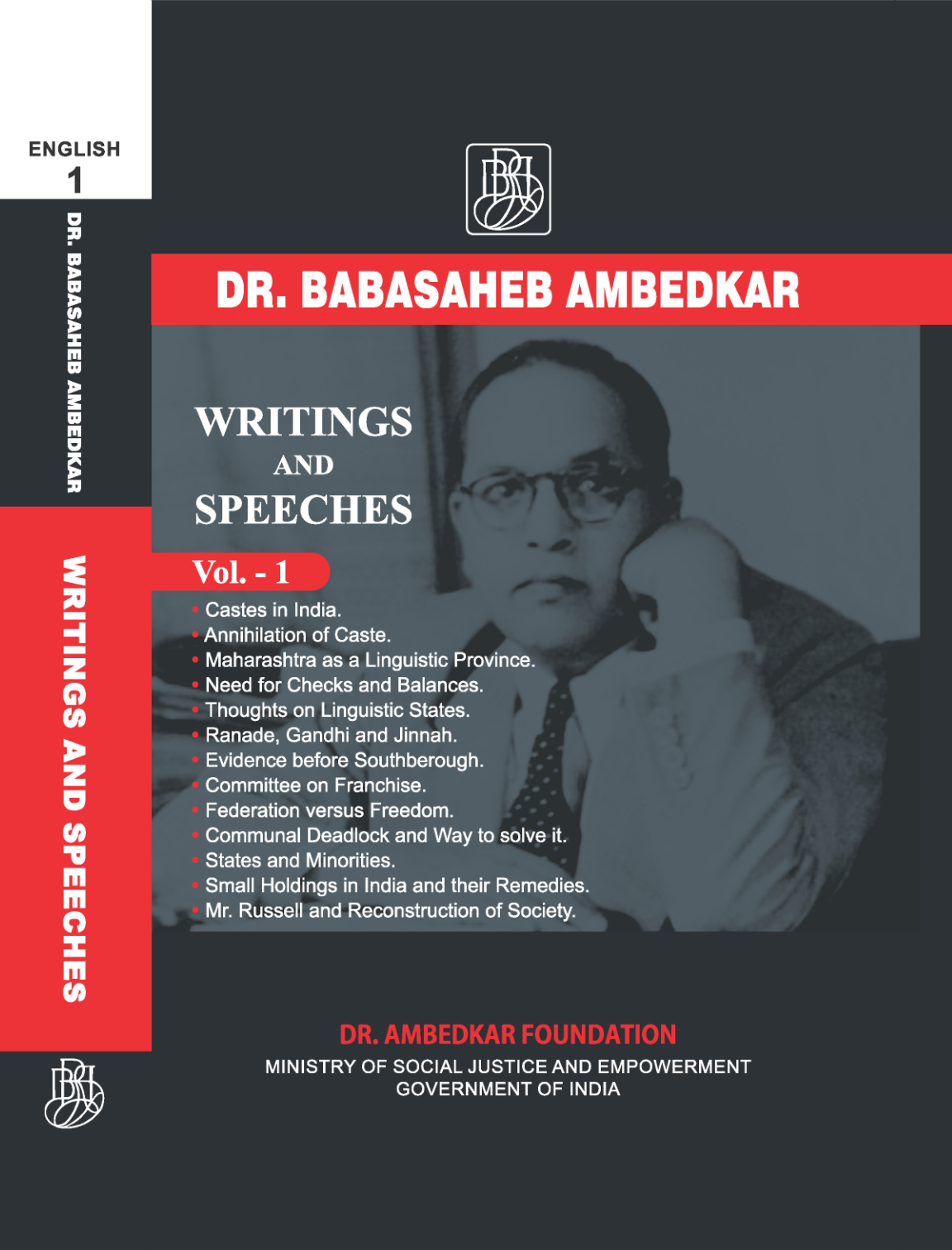
This volume presents a collection of Dr. B. R. Ambedkar’s early writings, speeches, and memoranda, providing insight into his intellectual foundation, social philosophy, and reformist zeal. The documents cover his formative years, his critical reflections on Indian society, and his advocacy for the rights of the marginalized, especially the Depressed Classes (Dalits). At its core, the volume highlights Ambedkar’s analysis of caste, religion, and social exclusion in India. He examines how the caste system perpetuates inequality, condemning untouchability as a deeply entrenched social evil. His writings argue that Hindu social order is structurally oppressive, designed to maintain the supremacy of certain classes at the expense of the majority. He urges for social justice through legal, political, and educational reforms. A significant portion deals with his seminal paper “Castes in India: Their Mechanism, Genesis and Development” (1916), which he presented while studying at Columbia University. In this work, Ambedkar traces the origin of caste to the rigid enforcement of endogamy within social groups. He argues that caste is not a racial division but a social mechanism deliberately maintained to preserve hierarchy. This sociological analysis positioned him as one of the earliest and most rigorous critics of caste. The volume also contains correspondence and memoranda submitted to various government bodies, showing his role as a policy advocate. Ambedkar emphasizes the need for political safeguards, representation, and affirmative measures for the Depressed Classes. His memoranda articulate demands for separate electorates, reserved seats, and state intervention in social reform, reflecting his belief that political power was essential to dismantle caste oppression. His early speeches further illuminate his concerns. Ambedkar stresses the importance of education, self-respect, and unity among oppressed communities. He exhorts them to cultivate “organization and agitation” as tools of liberation. Through these addresses, he emerges as both a scholar and a mass leader committed to mobilizing Dalits for their dignity and rights. Another major theme is religion. Ambedkar critiques Hindu scriptures for legitimizing inequality, calling them a barrier to social progress. He proposes a rational and ethical approach to religion, one that fosters equality and fraternity rather than division. His thoughts foreshadow his later decision to embrace Buddhism as a path to liberation for Dalits. Throughout, the writings reveal Ambedkar’s blend of scholarship and activism. His style combines rigorous research with passionate advocacy. He draws from history, sociology, economics, and law to construct arguments that challenge orthodoxies and inspire reform. This volume underscores his conviction that social emancipation requires both intellectual critique and political action. In essence, Volume 1 documents the evolution of Ambedkar’s thought: from an incisive critic of caste to a visionary leader demanding structural change. It sets the stage for his later works on constitutionalism, democracy, and religion. The collection is not only a record of Ambedkar’s early struggles and insights but also a foundational text for understanding modern India’s quest for social justice and equality.
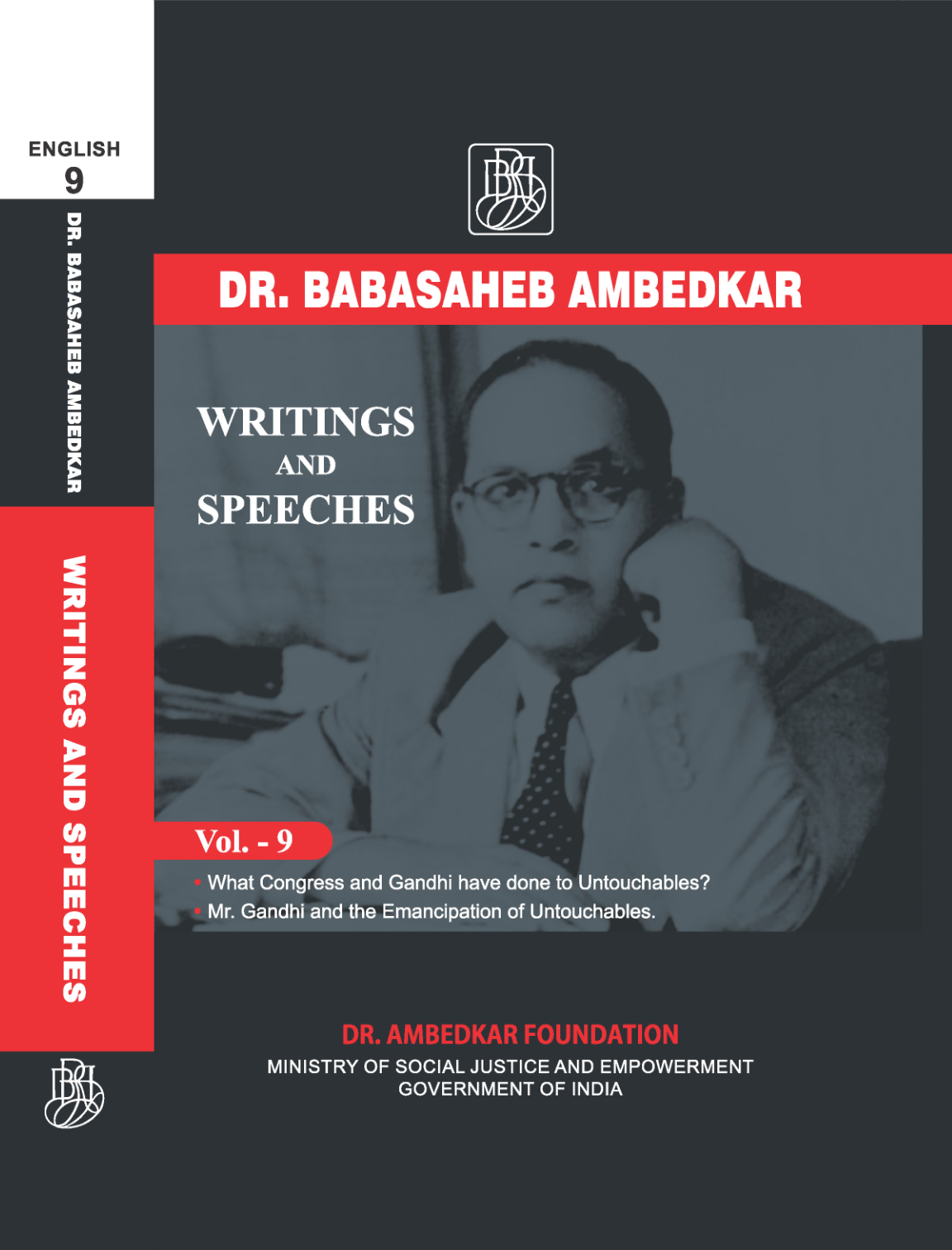
Volume
Volume 9 of Dr. Babasaheb Ambedkar: Writings and Speeches contains one of Ambedkar’s most forceful political works, “What Congress and Gandhi Have Done to the Untouchables”, first published in 1945 and revised in 1946 . This volume is a sustained critique of the Indian National Congress and Mahatma Gandhi, highlighting their failure to address the concerns of the Depressed Classes (Scheduled Castes). It reflects Ambedkar’s disillusionment with mainstream nationalist politics and his insistence that independence without social equality would leave Dalits oppressed. At the heart of this volume is Ambedkar’s argument that the Congress Party, dominated by upper-caste Hindus, never genuinely represented Dalits. He accuses Congress leaders of treating untouchables as political pawns, while refusing to dismantle the caste system that kept them in subjugation. Gandhi’s campaigns for “Harijan upliftment” are critiqued as superficial efforts that preserved Hindu social order rather than transforming it. Ambedkar contrasts Gandhi’s paternalism with his own demand for political power, representation, and social dignity for Dalits. The book also elaborates on Ambedkar’s position during the Poona Pact (1932) and its aftermath, where separate electorates for Dalits were replaced with reserved seats within a joint electorate system under Gandhi’s pressure. Ambedkar saw this as a betrayal of Dalit interests, as it reduced their chances of independent representation. The volume thus emphasizes that real emancipation could not come from Congress or Gandhi but through independent political assertion by Dalits themselves. Beyond political critique, Ambedkar develops a broader analysis of the governing classes versus the servile classes in Indian society . He argues that social and political power has always been concentrated in the hands of a few, while the oppressed majority have been denied justice. He warns that if India’s democracy did not ensure true equality, it would remain hollow. Overall, Volume 9 reveals Ambedkar’s sharp polemical style and his unwavering demand for justice for the untouchables. It shows him as a radical critic of nationalist politics, unwilling to compromise on the question of caste equality. This volume is essential for understanding Ambedkar’s differences with Gandhi and his conviction that Dalit liberation required both political safeguards and the annihilation of caste.
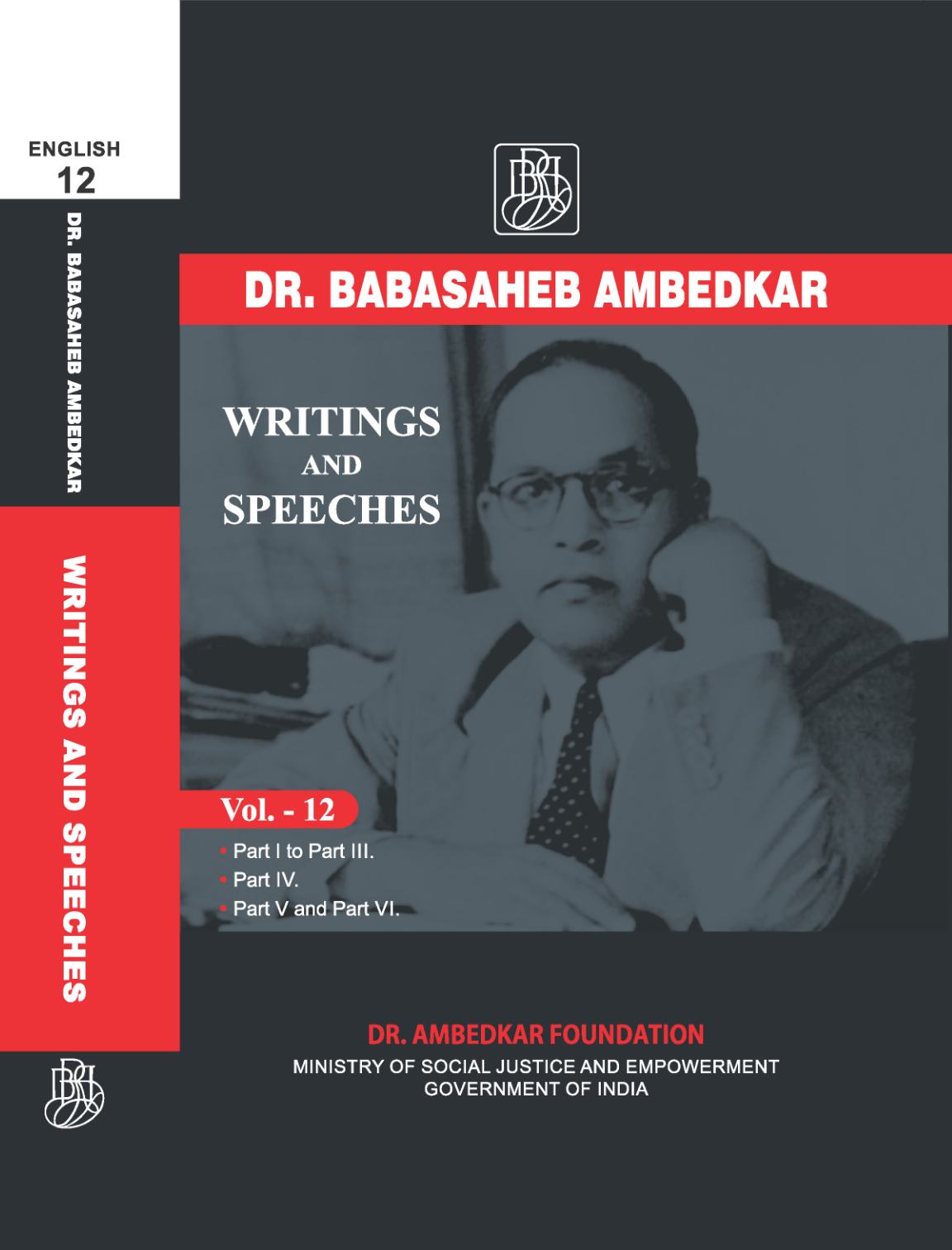
Volume
Volume 12 of Dr. Babasaheb Ambedkar: Writings and Speeches is a diverse collection that brings together Ambedkar’s historical, constitutional, and autobiographical writings. It highlights his role as a historian, political thinker, jurist, and critic of colonial and caste structures, offering a wide lens on his intellectual contributions. The first part includes “Ancient Indian Commerce” and “Commercial Relations of India in the Middle Ages”, where Ambedkar examines India’s early economic history and its ties with other regions, particularly in relation to the rise of Islam and European expansion. He argues that India was once a vibrant center of commerce, but internal social rigidities and external invasions eroded its economic strength. These writings showcase his belief that economic decline was tied to social stagnation. In the second part, “The Untouchables and the Pax Britannica”, Ambedkar analyzes the position of Dalits under British rule. He critically assesses whether colonialism alleviated or reinforced caste-based oppression, concluding that while the British introduced some reforms, they largely left traditional hierarchies intact. This section underscores his consistent theme: that social emancipation, not just political freedom, was the true measure of progress. The third part contains “Lectures on the English Constitution”, a series of detailed expositions on constitutional principles such as Parliament, the Crown, the House of Lords, and the privileges of legislators. Ambedkar’s engagement with the English system reflects his comparative approach, which later informed his own role in drafting the Indian Constitution. In the fourth part, Ambedkar provides legal and constitutional notes on subjects such as Common Law, Dominion Status, the Law of Specific Relief, and the Law of Trust. These writings reveal his deep grasp of jurisprudence and show how he adapted Western legal concepts to the Indian context. A particularly important feature of this volume is the inclusion of Ambedkar’s autobiographical essay “Waiting for a Visa”, a vivid personal account of caste discrimination he faced. Through stark experiences—such as being denied lodging, transport, or water—Ambedkar illustrates how untouchability pervaded every sphere of life. This text is one of the rare autobiographical glimpses into his personal struggles and forms a critical testimony of caste oppression in 20th-century India. Overall, Volume 12 demonstrates the breadth of Ambedkar’s scholarship—from history and economics to law, politics, and lived experience. It captures his effort to reinterpret India’s past, critique its present, and lay foundations for a just future. The combination of historical analysis, constitutional thought, and autobiography makes this volume a vital resource for understanding Ambedkar as both a thinker and a witness to the injustices he fought against.
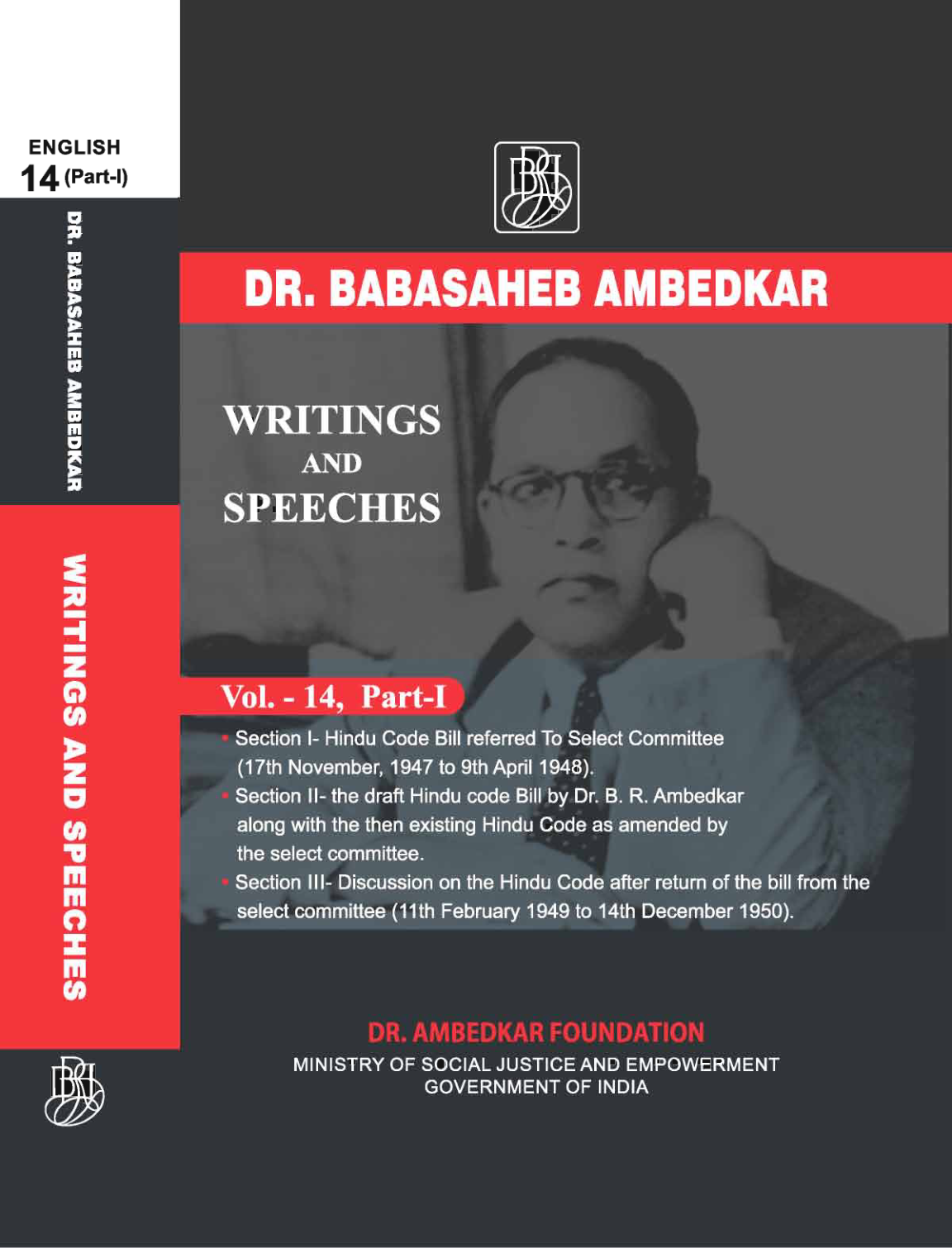
Volume
Volume 14 Part I is a powerful collection that captures Dr. B.R. Ambedkar’s legislative vision during his tenure as India’s first Law Minister. Focusing on the Hindu Code Bill, this volume presents Ambedkar as a nation-builder committed to transforming social and legal structures. It shows him not only as a jurist and constitutional reformer but also as a champion of women’s rights, equality, and rational social progress.
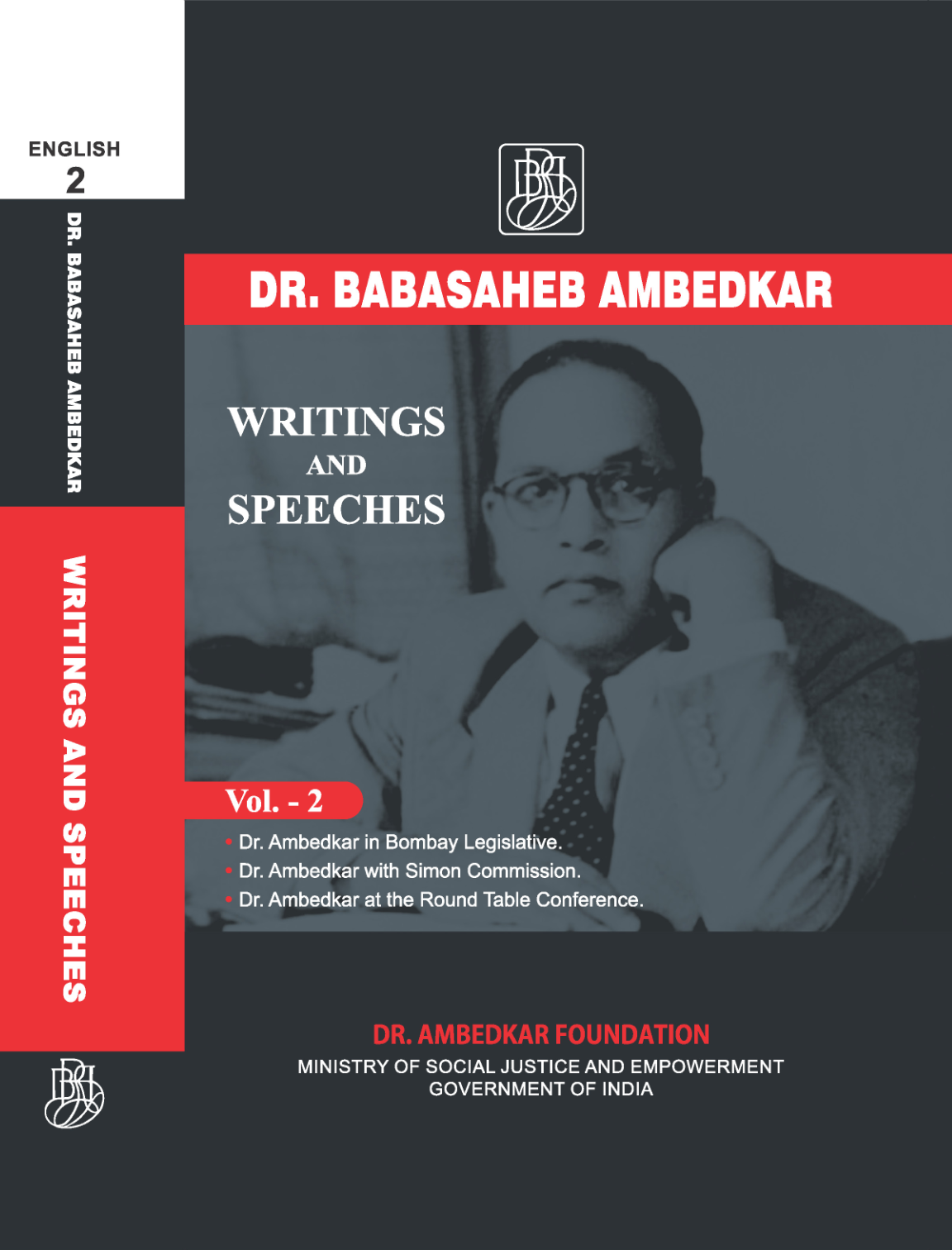
Volume
This volume focuses heavily on Ambedkar’s most famous and polemical work, “Annihilation of Caste” (1936), along with his related writings, speeches, and correspondence from the mid-1930s to the early 1940s. It captures a crucial period where his critique of Hindu society, caste oppression, and religious orthodoxy reached its sharpest expression. The central piece, Annihilation of Caste, was originally prepared as a speech for the Jat-Pat Todak Mandal conference in 1936, but it was never delivered because the organizers objected to its radical content. In this text, Ambedkar launches a systematic attack on the caste system, arguing that social reform must precede political reform if India is to achieve genuine democracy. He emphasizes that Hindu scriptures, such as the Manusmriti, are the foundation of caste hierarchy and must be discarded if social equality is to be realized. His prescription is not reform within Hinduism but a rejection of its authority altogether. The volume also includes Ambedkar’s powerful exchange with Mahatma Gandhi over caste and untouchability. Gandhi, writing in Harijan, defended Hinduism as reformable, while Ambedkar insisted that its scriptural foundation was inherently oppressive. This public debate highlighted the ideological gulf between the two leaders on the question of caste reform. Ambedkar’s replies remain some of his most forceful arguments against superficial reforms that fail to uproot structural inequality. Other writings in this volume address social reform, religious conversion, and the role of law and politics in creating a just society. Ambedkar urges Dalits to educate themselves, unite, and seek liberation not by appealing to upper-caste goodwill but by asserting their dignity and rights. His reflections here anticipate his later move toward Buddhism as a liberating faith. The volume illustrates Ambedkar’s dual role as a rigorous scholar and a fearless activist. He marshals historical, legal, and sociological evidence to critique the caste system while also mobilizing oppressed communities to reject servitude. His style is polemical, uncompromising, and deeply moral, rooted in the conviction that democracy without social equality is hollow.
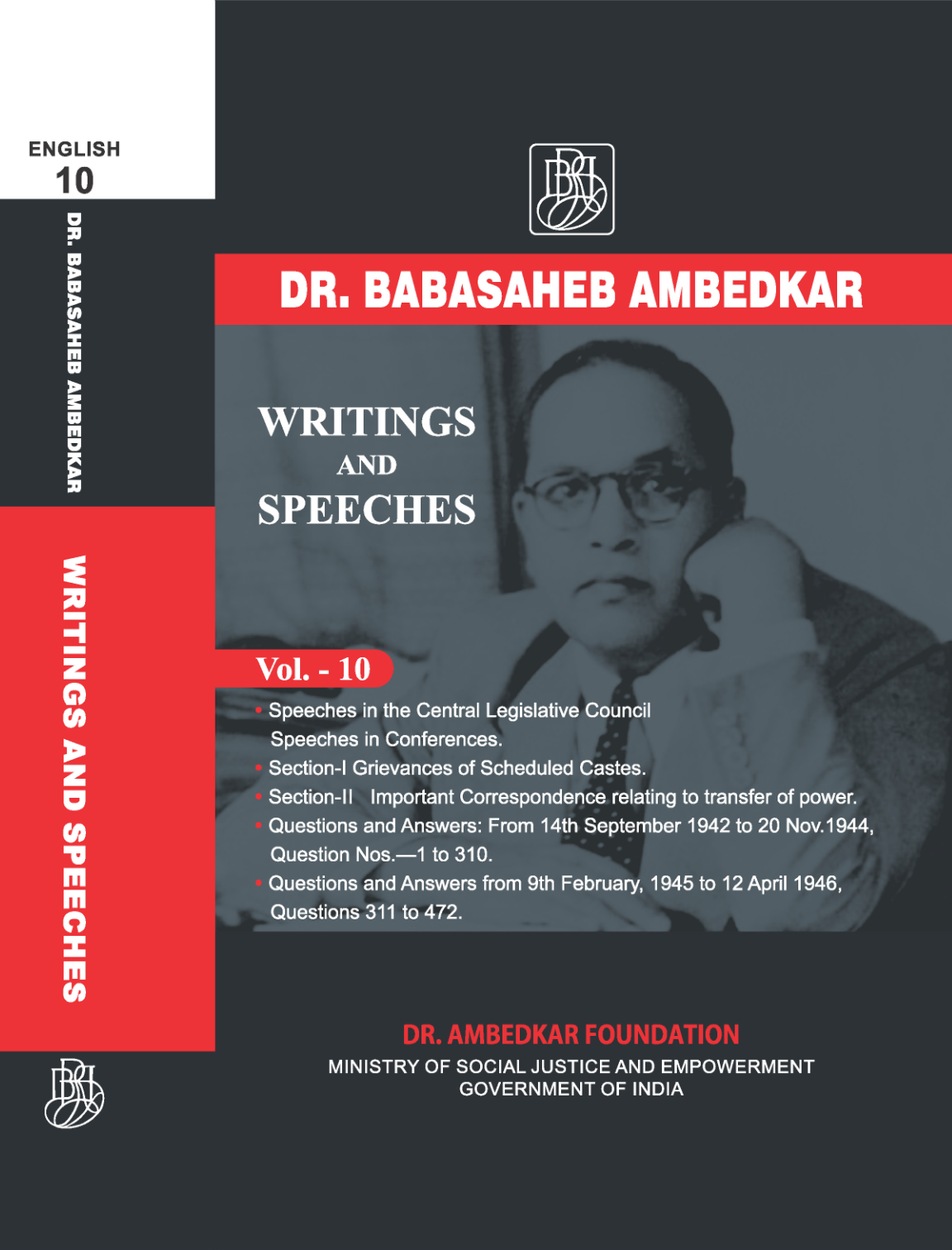
Volume
Volume 10 of Dr. Babasaheb Ambedkar: Writings and Speeches focuses on Ambedkar’s crucial period as a Labour Member of the Viceroy’s Executive Council (1942–1946), during the Second World War. This phase marked his direct role in governance, where he influenced labour laws, industrial relations, and economic policies at the highest level of the colonial administration. A large part of the volume consists of Ambedkar’s official speeches, legislative interventions, and policy statements. He introduced and supported laws concerning labour rights, working hours, maternity benefits, employment exchanges, apprenticeships, and compensation for war-related injuries. His interventions ensured that workers’ welfare became a serious concern for the government at a time when industrial labour was central to the war effort. Ambedkar also emphasized technical training and skill development for Scheduled Castes, proposing apprenticeship schemes in railway workshops, printing presses, and other government undertakings. His aim was not only to secure immediate labour protections but also to lay the foundation for long-term economic empowerment of marginalized communities. Another major theme of this volume is his criticism of governmental neglect of Scheduled Castes. In reviewing official documents like India and the Aggressor (1935–40), he strongly condemned the near-complete omission of Dalit struggles and pronouncements, arguing that this sidelining gave the impression that Scheduled Castes were politically insignificant. He called it a grave injustice at a decisive moment in India’s freedom movement. Beyond labour issues, Ambedkar used his position to reflect on nationalism, democracy, and communal questions. In his writings and broadcasts, he argued that nationalism should not come at the cost of democracy or social justice, and that labour’s true creed was internationalism, not narrow nationalism. His governance philosophy combined pragmatism with deep commitment to equality. Overall, Volume 10 highlights Ambedkar as a statesman and policy-maker, working within the colonial system yet pushing its boundaries to secure justice for workers and oppressed communities. It shows how he linked labour rights, economic democracy, and social equality while simultaneously critiquing the invisibilization of Dalits in official narratives. This volume captures his role not only as a leader of the marginalized but also as an architect of modern labour policy in India.
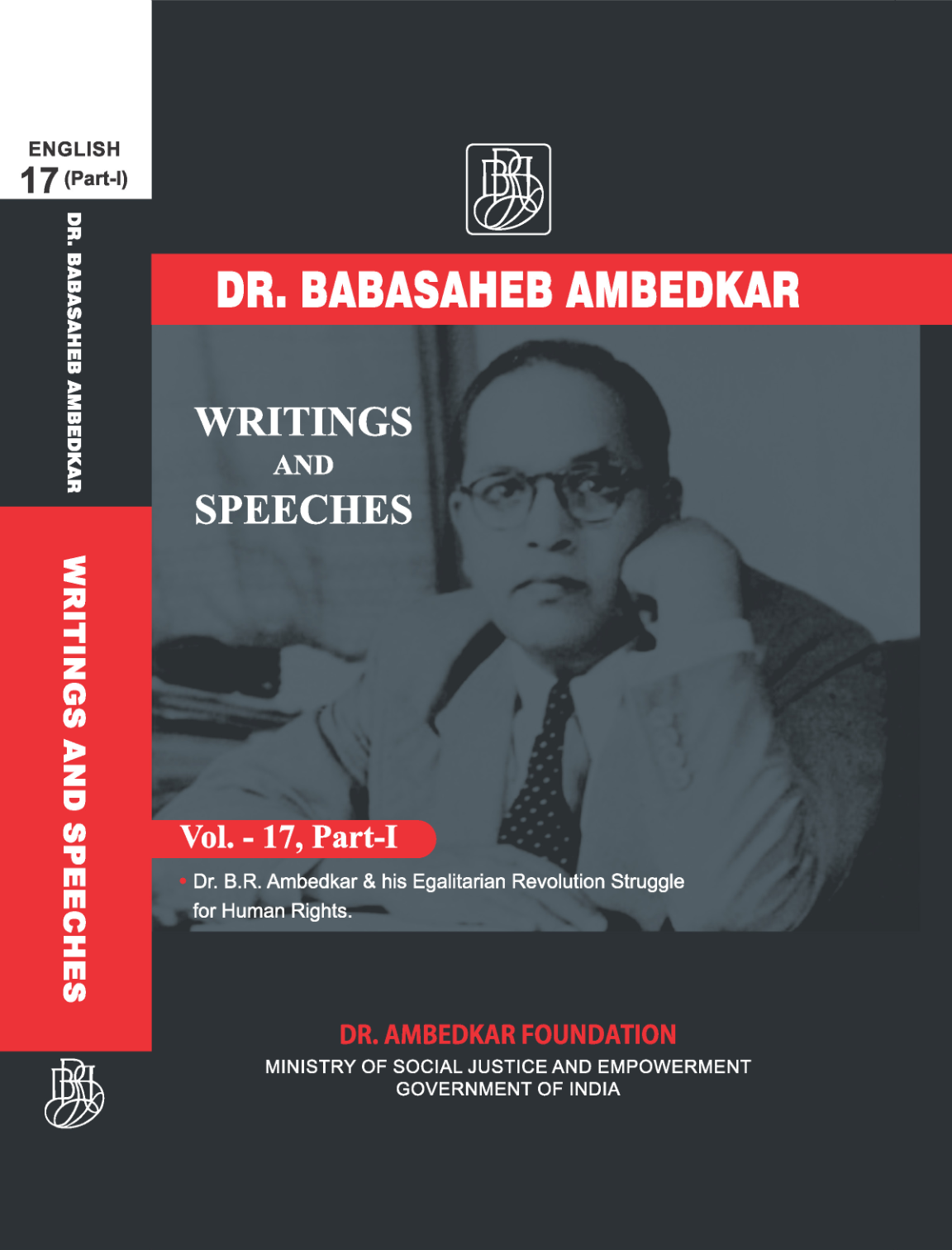
Volume
This volume covers Ambedkar’s writings on Buddhism and Dhamma, focusing on its philosophical foundations and social relevance. It reflects his effort to reinterpret Buddhism as a rational, ethical, and egalitarian path for social transformation.
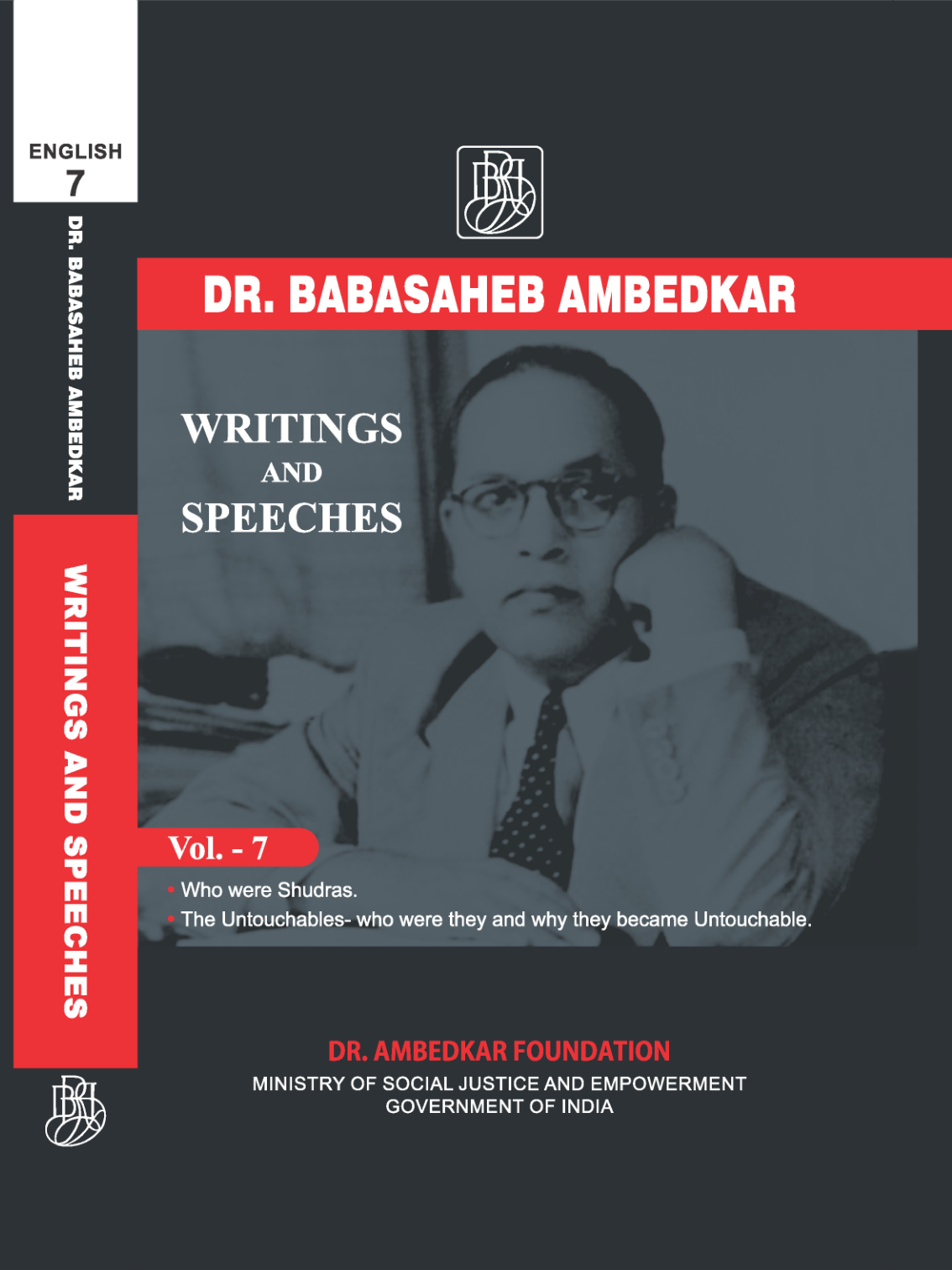
Volume
Volume 7 of Dr. Babasaheb Ambedkar: Writings and Speeches contains Ambedkar’s scholarly essays, unfinished drafts, and key writings that showcase his role as both a historian and a social reformer. Unlike earlier volumes that focus largely on his speeches and political interventions, this volume is deeply intellectual, presenting his critical examination of Indian society, philosophy, and history. A large portion of the volume is devoted to “Who Were the Shudras?” (1946), Ambedkar’s detailed historical study on the origin of the Shudras within the Hindu social system. He argues that the Shudras were originally a high-ranking Aryan community that was gradually degraded in status due to social conflicts with the Brahmins. This text is not only a work of history but also a powerful critique of how Hinduism institutionalized inequality. Another significant section is “The Untouchables: Who Were They and Why They Became Untouchables?” (1948), where Ambedkar traces the origins of untouchability. He argues that untouchables were originally Buddhists who resisted Brahminical domination, and their social ostracism was a reaction by caste Hindus against dissenters. This writing directly challenges traditional Hindu explanations and places caste oppression within a historical and political framework. The volume also includes Ambedkar’s notes on philosophy, comparative religion, and Buddhism, where he compares Hinduism, Buddhism, and Western thought. His reflections on liberty, equality, and fraternity demonstrate his effort to construct a moral and ethical foundation for a just society. Many of these writings show his gradual intellectual movement toward Buddhism, which he would eventually embrace in 1956. Overall, Volume 7 portrays Ambedkar not just as a political leader but also as a scholar of history and religion. It highlights his method of using historical evidence and rational inquiry to expose the roots of social injustice in India. By dismantling myths around the Shudras and untouchables, Ambedkar provided oppressed communities with a new history that affirmed their dignity and challenged centuries of Brahminical dominance.
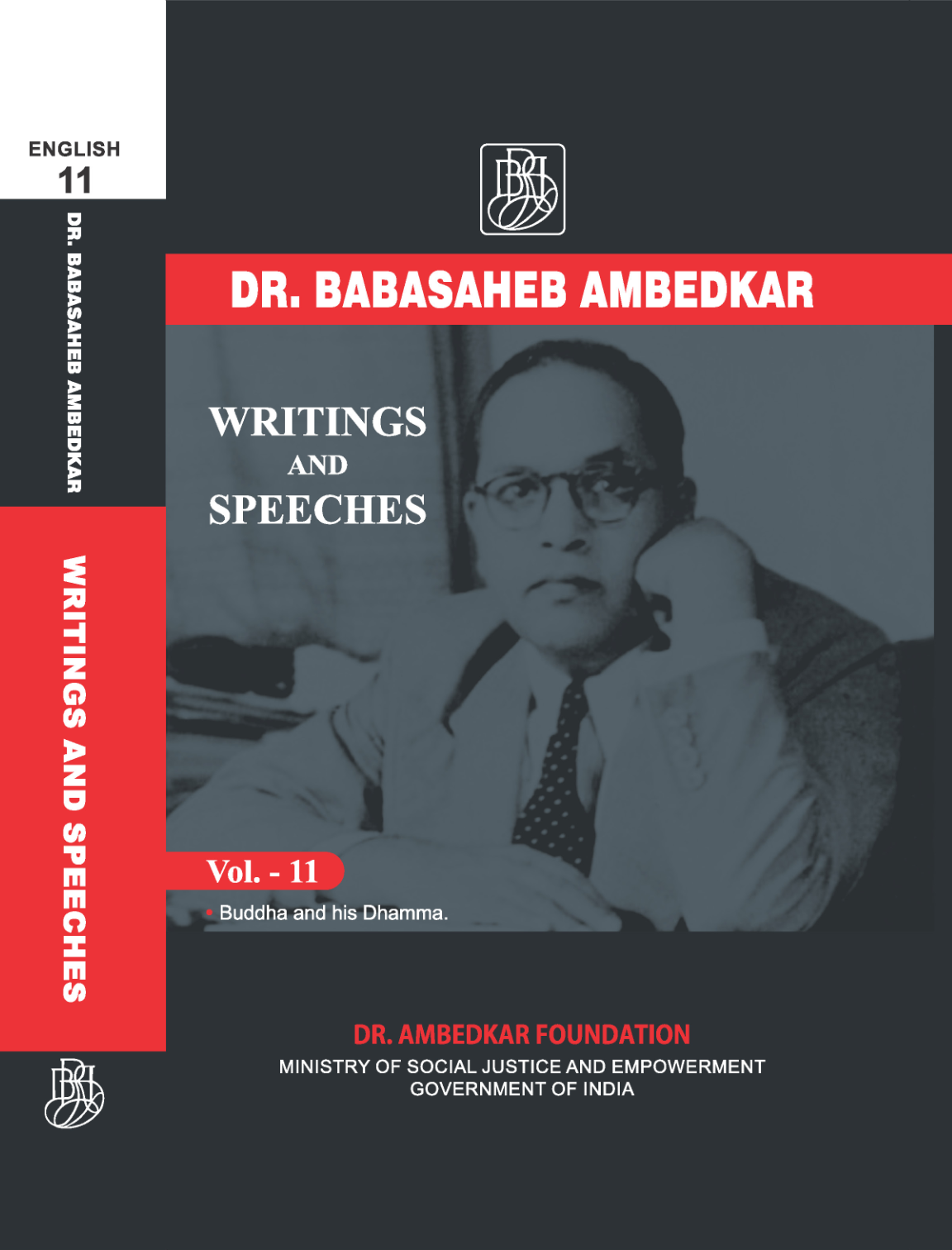
Volume
Volume 11 of Dr. Babasaheb Ambedkar: Writings and Speeches is dedicated to his final and most influential work, “The Buddha and His Dhamma”, which was published posthumously in 1957. This text serves as both a biography of the Buddha and a reinterpretation of Buddhism for modern India, and it became the spiritual foundation for the mass conversion of Dalits to Buddhism under Ambedkar’s leadership in 1956. The book is divided into eight main sections, tracing the life of the Buddha, his enlightenment, and the spread of his teachings. Ambedkar presents the Buddha not merely as a religious figure but as a rational reformer who rejected ritualism, caste hierarchy, and metaphysical speculation. Instead, the Buddha emphasized compassion, wisdom, and ethical living as the basis of social harmony. A central theme of the volume is Ambedkar’s distinction between Religion and Dhamma. He defines religion as often being rooted in dogma and rituals, whereas Dhamma is a code of righteous conduct that governs human relationships. For Ambedkar, the Buddha’s Dhamma represents liberty, equality, and fraternity, expressed through the principles of prajna (understanding) and karuna (compassion). The text also explains the Buddha’s views on conversion, morality, and social justice. Ambedkar stresses that Buddhism is not an otherworldly doctrine but a practical guide for creating a just society. He highlights how the Buddha accepted people from all castes and genders into his Sangha, breaking social barriers and offering a vision of equality. The epilogue gathers tributes from scholars and thinkers about the Buddha’s greatness and universal message. Ambedkar closes with a vow to spread the Dhamma, symbolizing both a personal and collective mission for his followers. Overall, Volume 11 is both a religious scripture and a manifesto of social transformation. It reflects Ambedkar’s intellectual journey from a critic of Hinduism to a Buddhist reformer, offering his followers a new ethical framework rooted in reason, equality, and compassion. The work remains the cornerstone of Navayana Buddhism, inspiring millions to seek dignity and liberation through the Buddha’s path.
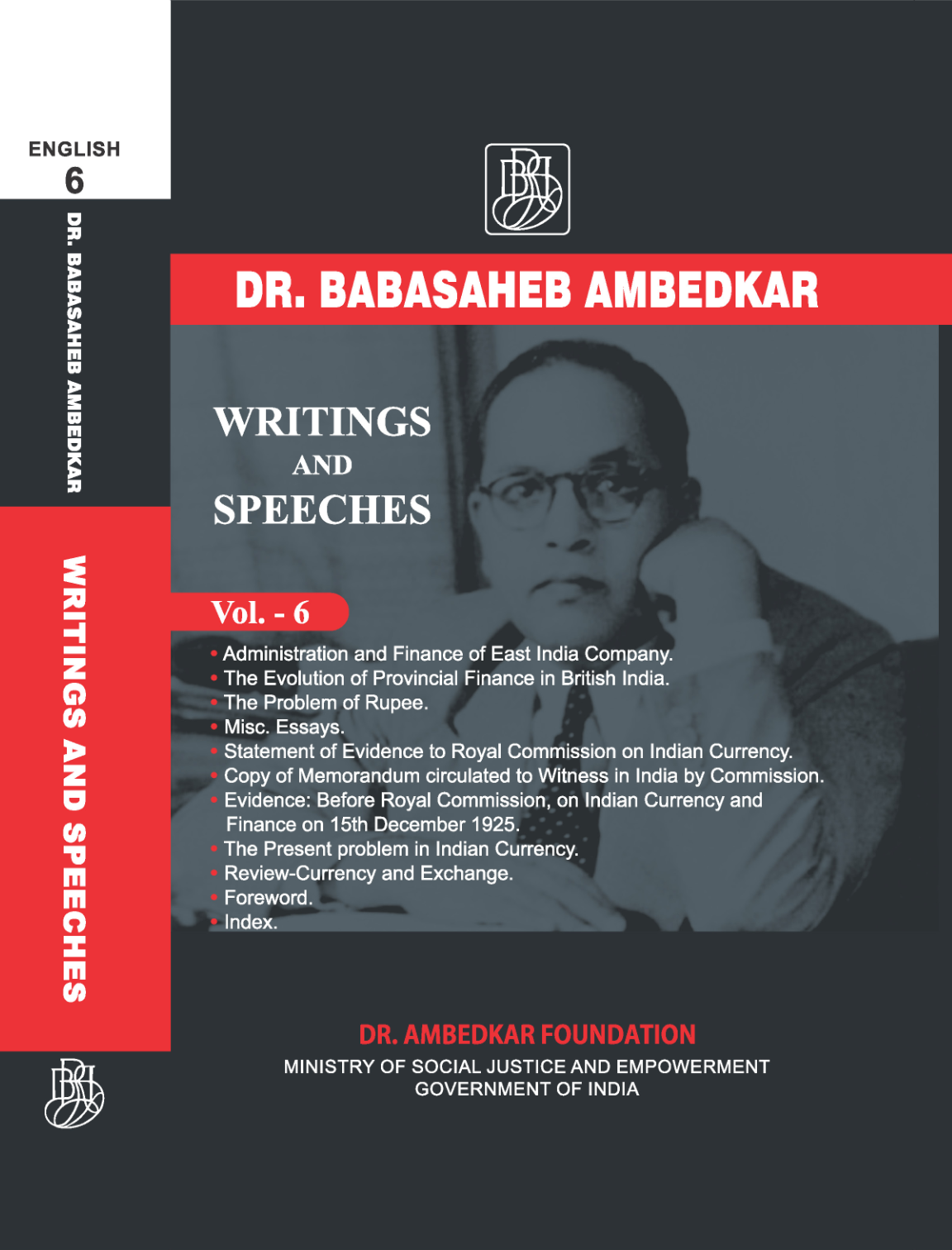
Volume
xgdfgdgrd fgdghdjjgjbjbjbk
.png?alt=media&token=c69c93a6-c4d8-480d-8efe-b27b5895f297)
Volume
This volume is dedicated to the grammar and dictionary of the Pali language, reflecting Ambedkar’s deep study of Buddhist literature. It aims to make ancient Buddhist texts more accessible and promote understanding of Buddhist philosophy and history.
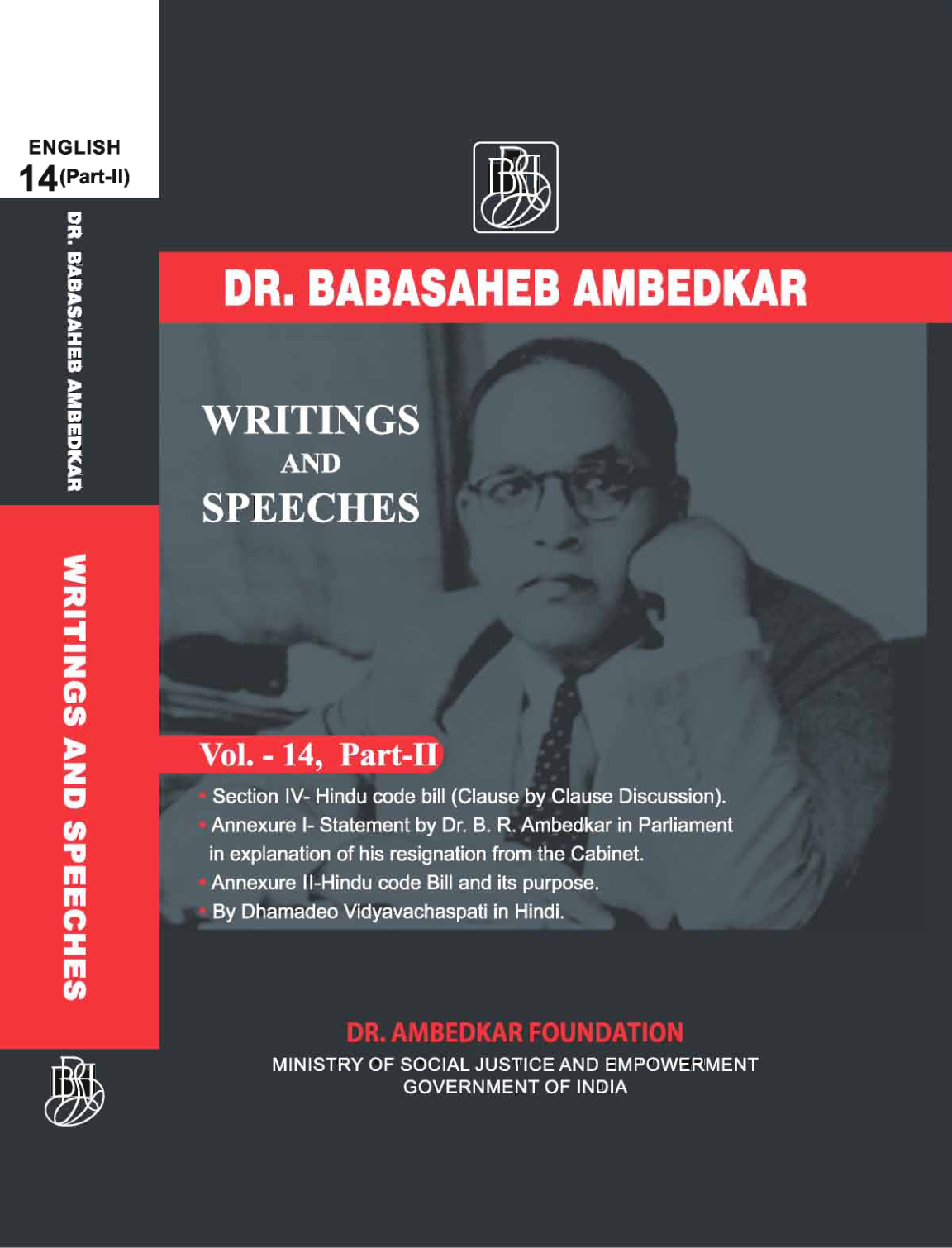
Volume
Volume 14 Part II offers a detailed exposition of Dr. B.R. Ambedkar’s legal reasoning behind each clause of the Hindu Code Bill, one of the most ambitious social reform projects in independent India. This volume showcases Ambedkar as a meticulous jurist and legislative architect, explaining reforms related to marriage, divorce, inheritance, adoption, guardianship, and women’s property rights.
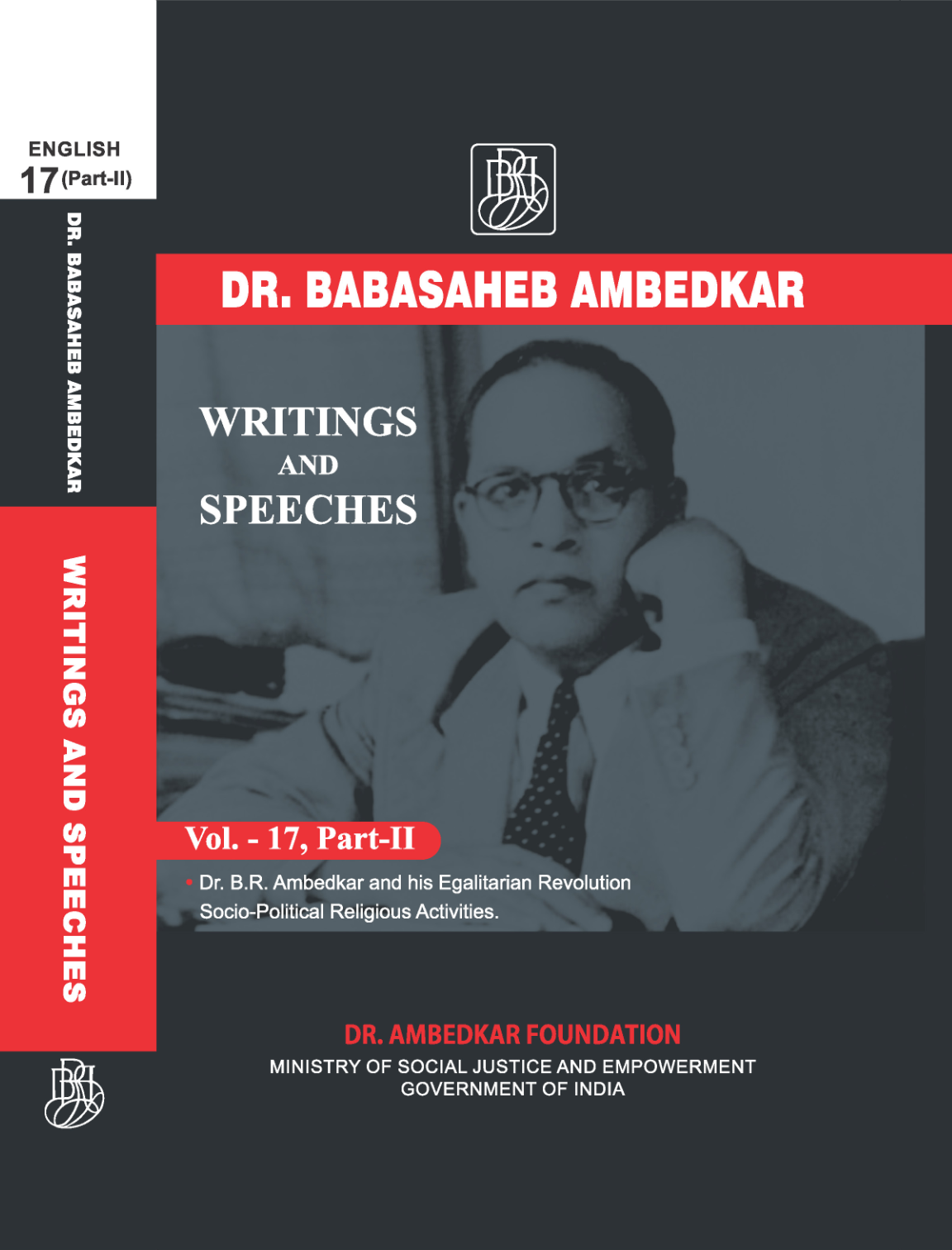
Volume
Volume 17 (Part II) presents Dr. B. R. Ambedkar’s later writings and speeches that reflect his mature views on democracy, social justice, and constitutional values. In this volume, he critically examines the persistence of caste inequality and warns against the gap between constitutional ideals and social reality. He emphasizes education, legal safeguards, and moral responsibility as essential tools for empowering the oppressed and strengthening democracy. Overall, the volume captures his clear vision of an inclusive India built on equality, dignity, and constitutional morality.
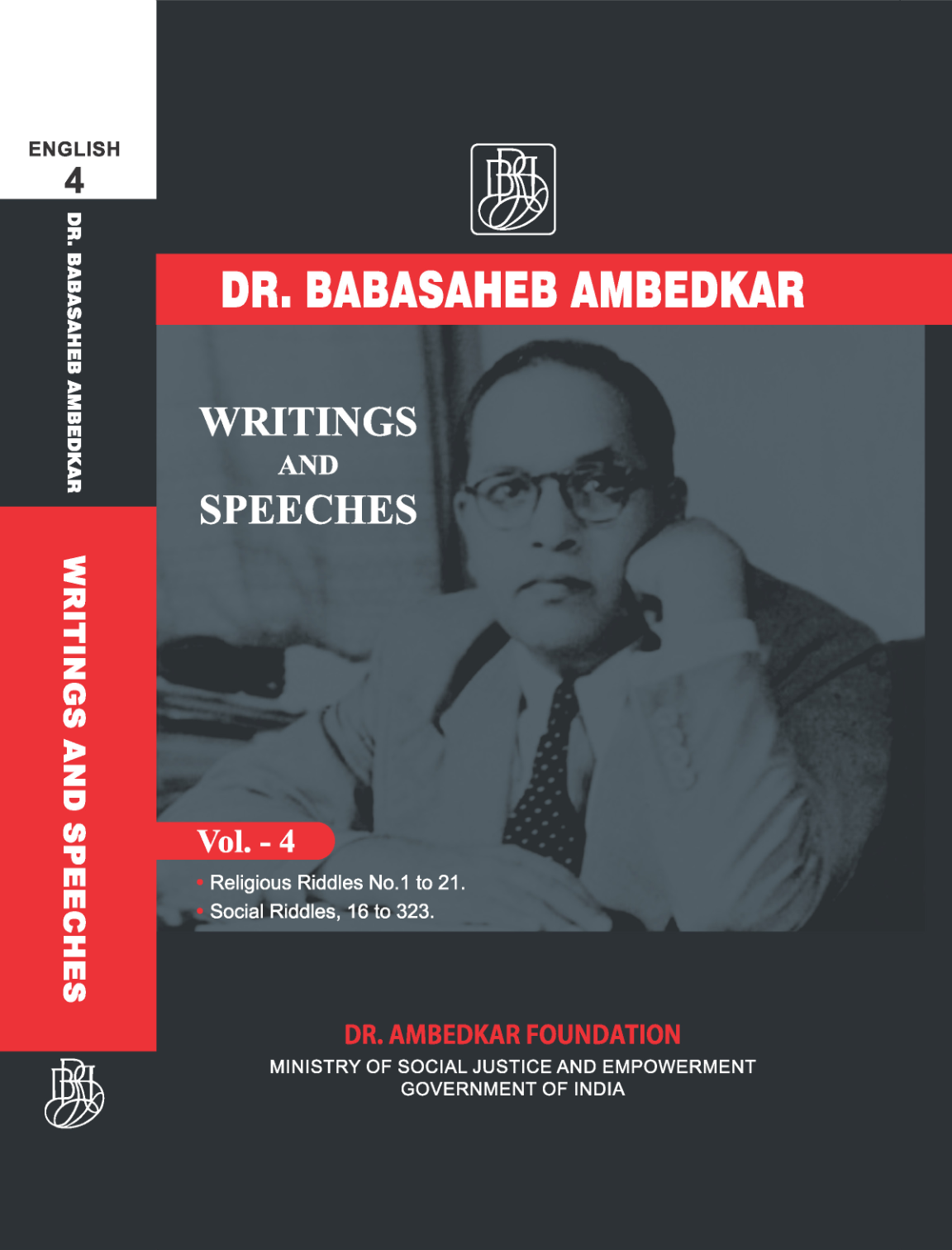
Volume
This volume is one of the most politically charged collections of Ambedkar’s writings. It documents his role in the Constituent Assembly, his deep involvement with the framing of India’s Constitution, and his broader political philosophy during the crucial transition from colonial rule to independence. A central highlight is Ambedkar’s work as the Chairman of the Drafting Committee of the Constitution of India. His speeches and interventions here showcase his commitment to embedding equality, justice, and liberty into the foundational law of the country. He stressed that political democracy must be accompanied by social and economic democracy; otherwise, India’s freedom would remain hollow. His warning that “political democracy cannot last unless there lies at the base of it social democracy” is a recurring theme. The volume also includes his memoranda and speeches on constitutional safeguards for minorities, scheduled castes, and other disadvantaged groups. Ambedkar strongly advocated for reservations in legislatures, government services, and education as tools for substantive equality. He emphasized that formal legal equality was insufficient without mechanisms to address historical oppression. Another significant part of this volume covers Ambedkar’s reflections on federalism, center-state relations, and the rights of citizens. He argued for a strong central government to ensure stability and unity, but balanced it with protections for individual rights and freedoms. His insistence on the Directive Principles of State Policy reflected his vision of a welfare state that would promote social justice alongside political freedom. The speeches also show his debates with other leaders in the Constituent Assembly. Ambedkar defended the inclusion of fundamental rights, labor protections, and affirmative action measures despite resistance from more conservative members. His interventions reveal his pragmatic yet principled approach—willing to compromise for consensus but unyielding on the core values of justice and equality. This volume also provides glimpses of Ambedkar’s disappointment with the direction of Indian politics post-independence. He criticized caste dominance in political life and warned against hero worship in democracy. These insights foreshadowed his eventual resignation from Nehru’s cabinet in 1951 over disagreements on the Hindu Code Bill, though that lies beyond this volume’s main timeframe. Overall, Volume 4 highlights Ambedkar as a constitution-maker, statesman, and democratic visionary. It captures his transition from a social reformer challenging Hindu orthodoxy to a national leader shaping the institutional framework of modern India. The themes of justice, equality, and fraternity that dominate his thought are woven into the very fabric of India’s Constitution.
Volume
Volume 13 of Dr. Babasaheb Ambedkar: Writings and Speeches is dedicated to Ambedkar’s work on the Indian Constitution, reflecting his pivotal role as Chairman of the Drafting Committee of the Constituent Assembly (1946–1949). It documents his speeches, draft texts, amendments, and explanations as he piloted the Constitution through debates, making it one of the most historically important volumes in the series. The volume opens with Ambedkar’s resolutions, interim reports, and committee documents on fundamental rights, union structure, and constitutional functions. It includes the Draft Constitution of India (published in 1948), Ambedkar’s correspondence with Dr. Rajendra Prasad, and the clause-by-clause discussions in the Assembly. His responses to critics show his mastery of constitutional law, his democratic spirit, and his pragmatic approach to balancing unity with diversity. A large portion is devoted to Ambedkar’s explanations of specific articles: fundamental rights, directive principles, powers of Parliament, judiciary, emergency provisions, and federal-state relations. These discussions highlight his effort to reconcile liberty with equality, parliamentary sovereignty with judicial review, and central authority with state autonomy. Throughout the volume, Ambedkar’s intellectual rigor and democratic temperament shine. He defended minority rights while emphasizing national integration, insisted on constitutional morality, and repeatedly reminded the Assembly that a good constitution could only work if implemented in the right spirit. His colleagues praised him as the “principal architect of the Constitution,” with contemporaries like T.T. Krishnamachari and Rajendra Prasad acknowledging that the burden of drafting largely fell on his shoulders. The final sections include the adoption of the Constitution in 1949, along with tabular statements mapping how each draft clause evolved into a final article. Ambedkar’s speeches at the time reflect both his cautious optimism and his warnings: while he believed the Constitution was flexible and strong, he cautioned that its success depended on the morality and responsibility of those in power. Overall, Volume 13 captures Ambedkar not only as a jurist but also as a visionary democrat and nation-builder. It is the definitive record of his role in shaping the Constitution, embodying his ideals of justice, equality, and fraternity as the foundation of independent India.
.png?alt=media&token=81aa63db-113a-415a-8963-761f5c32ee2f)
Volume
Volume 15 centers on Ambedkar’s final and most philosophical work, The Buddha and His Dhamma, along with his preparatory notes, drafts, and related essays. This volume reveals Ambedkar as a profound religious thinker who reinterprets Buddhism through the lens of social justice, rationality, and human equality.
Volume
Volume 3 of Dr. Babasaheb Ambedkar: Writings and Speeches brings together his speeches, addresses, and statements delivered during the late 1930s and early 1940s, a turbulent phase in India’s political journey. The collection reflects Ambedkar’s sharp insights into the Indian social order, his critique of Hinduism, and his vision for social, economic, and political justice. It also records his engagement with constitutional reforms and the question of minority rights during the run-up to India’s independence. A significant part of the volume is devoted to his work on the Philosophy of Hinduism, where Ambedkar examines religion not merely as belief but as a scheme of social governance. He critiques Hinduism for sanctioning inequality through the caste system and highlights how its social order denies liberty, equality, and fraternity—the essential elements of justice. His arguments reveal Hinduism’s structural flaws, especially the hierarchical organization of society and the systematic subjugation of women and the Shudras. Another major section deals with Revolution and Counter-Revolution in Ancient India, in which Ambedkar analyses the decline of Buddhism and the resurgence of Brahminism. He traces how reform movements were systematically crushed, how Brahminical dominance reasserted itself, and how women and lower castes bore the brunt of this counter-revolution. These chapters underscore his belief that India’s social stagnation and inequality were products of conscious historical processes. The volume also contains Ambedkar’s comparative reflections in Buddha or Karl Marx, where he examines the two thinkers’ approaches to social transformation. While he acknowledges Marx’s emphasis on class struggle, he favors the Buddhist path of non-violence, compassion, and moral transformation as a more sustainable and humane route to social justice. This section illustrates Ambedkar’s attempt to reconcile modern socialist thought with an ethical, indigenous framework rooted in Buddhism. Throughout the volume, Ambedkar insists that political freedom without social and economic equality is meaningless. His interventions in labour policy, his demand for constitutional safeguards, and his advocacy for the rights of the Depressed Classes show his multidimensional leadership. He consistently warns that independence dominated by upper-caste elites would replicate old injustices in new forms, and therefore social democracy must accompany political democracy. In sum, Volume 3 is not just a collection of Ambedkar’s writings but a powerful philosophical and political exploration. It captures his critique of Hinduism, his historical analysis of India’s religious and social transformations, and his blueprint for a just society grounded in liberty, equality, fraternity, and compassion. The volume marks Ambedkar’s evolution as both a radical critic of caste oppression and a visionary architect of India’s democratic future.
Volume
Volume 17 (Part III) contains Dr. B. R. Ambedkar’s later and more reflective writings, focusing on the practical working of democracy, constitutional governance, and social reform in post-Independence India. In this part, he critically analyzes how political democracy can fail without social and economic equality, and he warns against ignoring constitutional morality. He strongly emphasizes the role of law, education, and ethical leadership in protecting marginalized communities. Overall, the volume reflects Ambedkar’s deep concern for safeguarding democratic values and ensuring justice, dignity, and equality for all citizens.
Walk His Path
Born untouchable in 1891. Died having written the Constitution of the world's largest democracy. The ladder he climbed is yours too.
Jai Bhim. 💙
Built with love by the Unify the Lit team.