

Comments
Highlight color
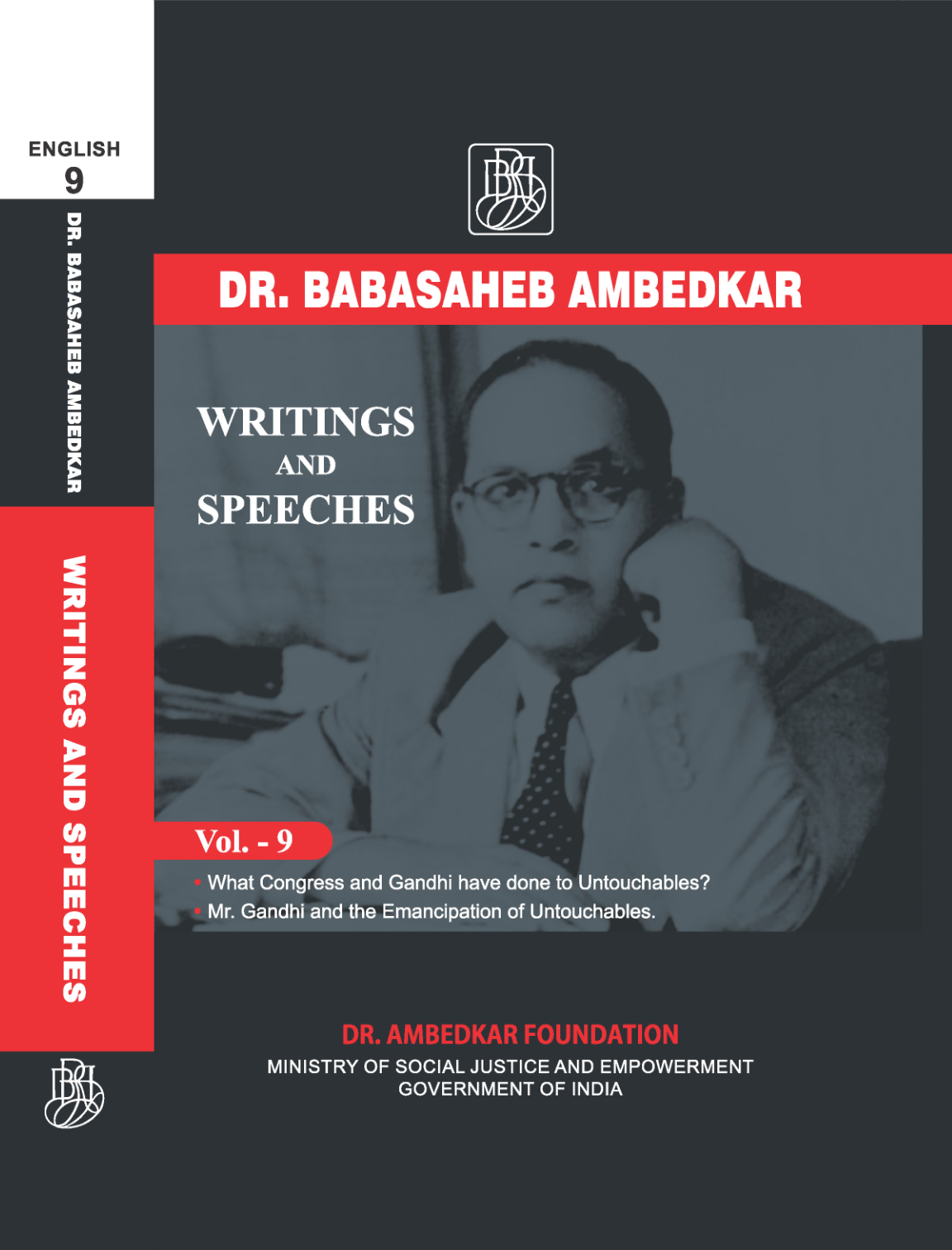
Volume 9 of Dr. Babasaheb Ambedkar: Writings and Speeches contains one of Ambedkar’s most forceful political works, “What Congress and Gandhi Have Done to the Untouchables”, first published in 1945 and revised in 1946 . This volume is a sustained critique of the Indian National Congress and Mahatma Gandhi, highlighting their failure to address the concerns of the Depressed Classes (Scheduled Castes). It reflects Ambedkar’s disillusionment with mainstream nationalist politics and his insistence that independence without social equality would leave Dalits oppressed. At the heart of this volume is Ambedkar’s argument that the Congress Party, dominated by upper-caste Hindus, never genuinely represented Dalits. He accuses Congress leaders of treating untouchables as political pawns, while refusing to dismantle the caste system that kept them in subjugation. Gandhi’s campaigns for “Harijan upliftment” are critiqued as superficial efforts that preserved Hindu social order rather than transforming it. Ambedkar contrasts Gandhi’s paternalism with his own demand for political power, representation, and social dignity for Dalits. The book also elaborates on Ambedkar’s position during the Poona Pact (1932) and its aftermath, where separate electorates for Dalits were replaced with reserved seats within a joint electorate system under Gandhi’s pressure. Ambedkar saw this as a betrayal of Dalit interests, as it reduced their chances of independent representation. The volume thus emphasizes that real emancipation could not come from Congress or Gandhi but through independent political assertion by Dalits themselves. Beyond political critique, Ambedkar develops a broader analysis of the governing classes versus the servile classes in Indian society . He argues that social and political power has always been concentrated in the hands of a few, while the oppressed majority have been denied justice. He warns that if India’s democracy did not ensure true equality, it would remain hollow. Overall, Volume 9 reveals Ambedkar’s sharp polemical style and his unwavering demand for justice for the untouchables. It shows him as a radical critic of nationalist politics, unwilling to compromise on the question of caste equality. This volume is essential for understanding Ambedkar’s differences with Gandhi and his conviction that Dalit liberation required both political safeguards and the annihilation of caste.