

Comments
Highlight color
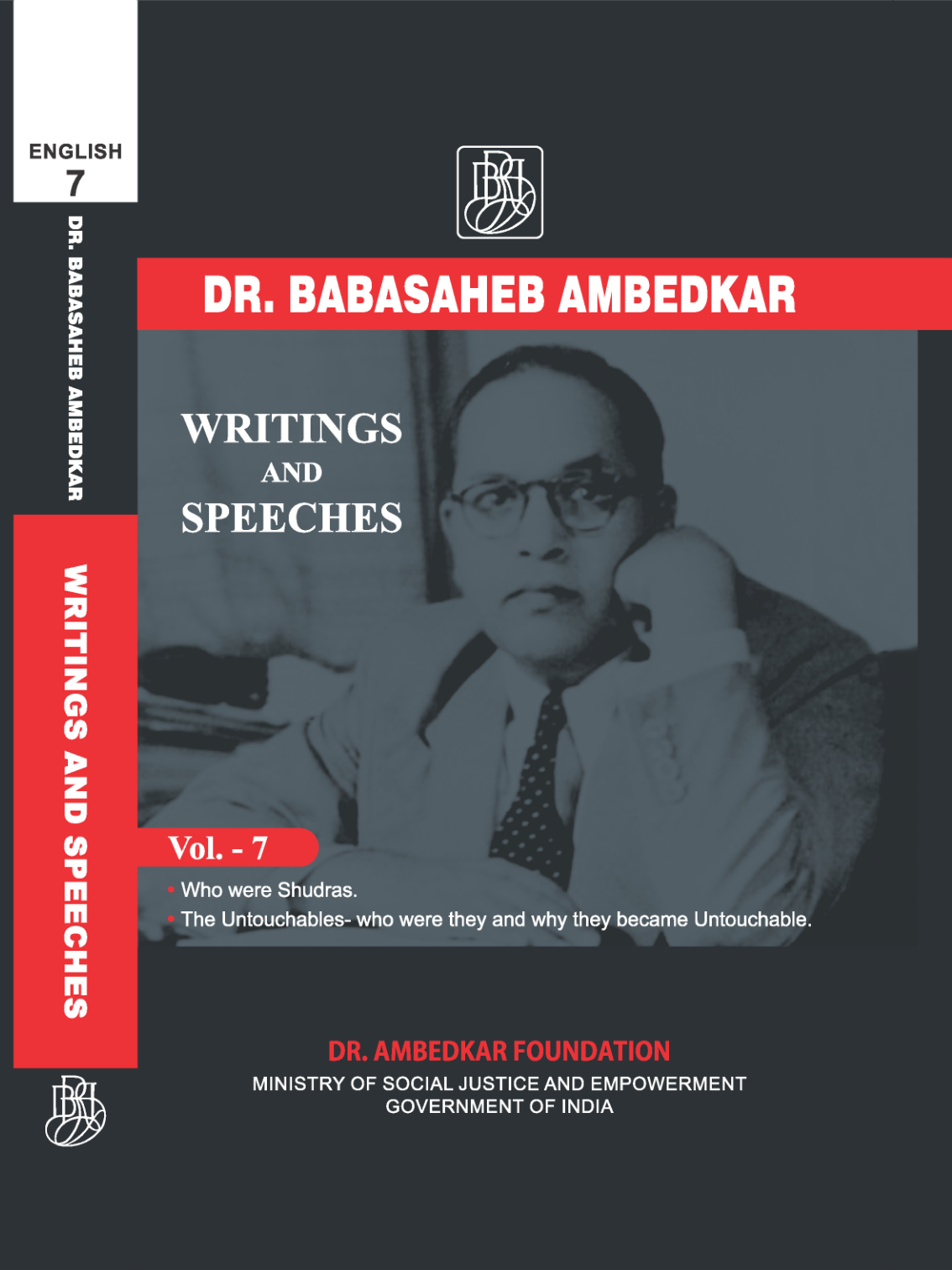
Volume 7 of Dr. Babasaheb Ambedkar: Writings and Speeches contains Ambedkar’s scholarly essays, unfinished drafts, and key writings that showcase his role as both a historian and a social reformer. Unlike earlier volumes that focus largely on his speeches and political interventions, this volume is deeply intellectual, presenting his critical examination of Indian society, philosophy, and history. A large portion of the volume is devoted to “Who Were the Shudras?” (1946), Ambedkar’s detailed historical study on the origin of the Shudras within the Hindu social system. He argues that the Shudras were originally a high-ranking Aryan community that was gradually degraded in status due to social conflicts with the Brahmins. This text is not only a work of history but also a powerful critique of how Hinduism institutionalized inequality. Another significant section is “The Untouchables: Who Were They and Why They Became Untouchables?” (1948), where Ambedkar traces the origins of untouchability. He argues that untouchables were originally Buddhists who resisted Brahminical domination, and their social ostracism was a reaction by caste Hindus against dissenters. This writing directly challenges traditional Hindu explanations and places caste oppression within a historical and political framework. The volume also includes Ambedkar’s notes on philosophy, comparative religion, and Buddhism, where he compares Hinduism, Buddhism, and Western thought. His reflections on liberty, equality, and fraternity demonstrate his effort to construct a moral and ethical foundation for a just society. Many of these writings show his gradual intellectual movement toward Buddhism, which he would eventually embrace in 1956. Overall, Volume 7 portrays Ambedkar not just as a political leader but also as a scholar of history and religion. It highlights his method of using historical evidence and rational inquiry to expose the roots of social injustice in India. By dismantling myths around the Shudras and untouchables, Ambedkar provided oppressed communities with a new history that affirmed their dignity and challenged centuries of Brahminical dominance.