

Comments
Highlight color
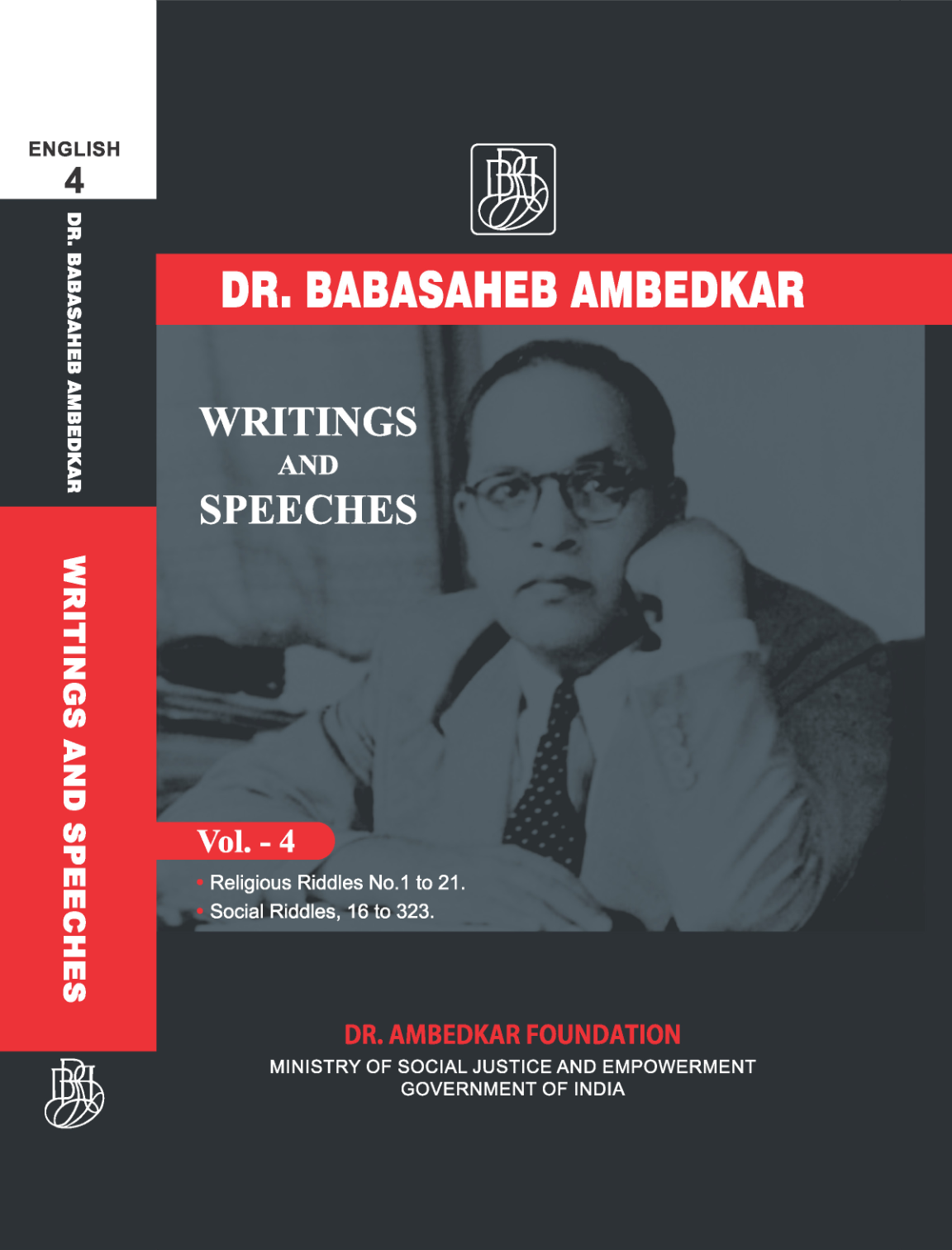
This volume is one of the most politically charged collections of Ambedkar’s writings. It documents his role in the Constituent Assembly, his deep involvement with the framing of India’s Constitution, and his broader political philosophy during the crucial transition from colonial rule to independence. A central highlight is Ambedkar’s work as the Chairman of the Drafting Committee of the Constitution of India. His speeches and interventions here showcase his commitment to embedding equality, justice, and liberty into the foundational law of the country. He stressed that political democracy must be accompanied by social and economic democracy; otherwise, India’s freedom would remain hollow. His warning that “political democracy cannot last unless there lies at the base of it social democracy” is a recurring theme. The volume also includes his memoranda and speeches on constitutional safeguards for minorities, scheduled castes, and other disadvantaged groups. Ambedkar strongly advocated for reservations in legislatures, government services, and education as tools for substantive equality. He emphasized that formal legal equality was insufficient without mechanisms to address historical oppression. Another significant part of this volume covers Ambedkar’s reflections on federalism, center-state relations, and the rights of citizens. He argued for a strong central government to ensure stability and unity, but balanced it with protections for individual rights and freedoms. His insistence on the Directive Principles of State Policy reflected his vision of a welfare state that would promote social justice alongside political freedom. The speeches also show his debates with other leaders in the Constituent Assembly. Ambedkar defended the inclusion of fundamental rights, labor protections, and affirmative action measures despite resistance from more conservative members. His interventions reveal his pragmatic yet principled approach—willing to compromise for consensus but unyielding on the core values of justice and equality. This volume also provides glimpses of Ambedkar’s disappointment with the direction of Indian politics post-independence. He criticized caste dominance in political life and warned against hero worship in democracy. These insights foreshadowed his eventual resignation from Nehru’s cabinet in 1951 over disagreements on the Hindu Code Bill, though that lies beyond this volume’s main timeframe. Overall, Volume 4 highlights Ambedkar as a constitution-maker, statesman, and democratic visionary. It captures his transition from a social reformer challenging Hindu orthodoxy to a national leader shaping the institutional framework of modern India. The themes of justice, equality, and fraternity that dominate his thought are woven into the very fabric of India’s Constitution.