

Comments
Highlight color
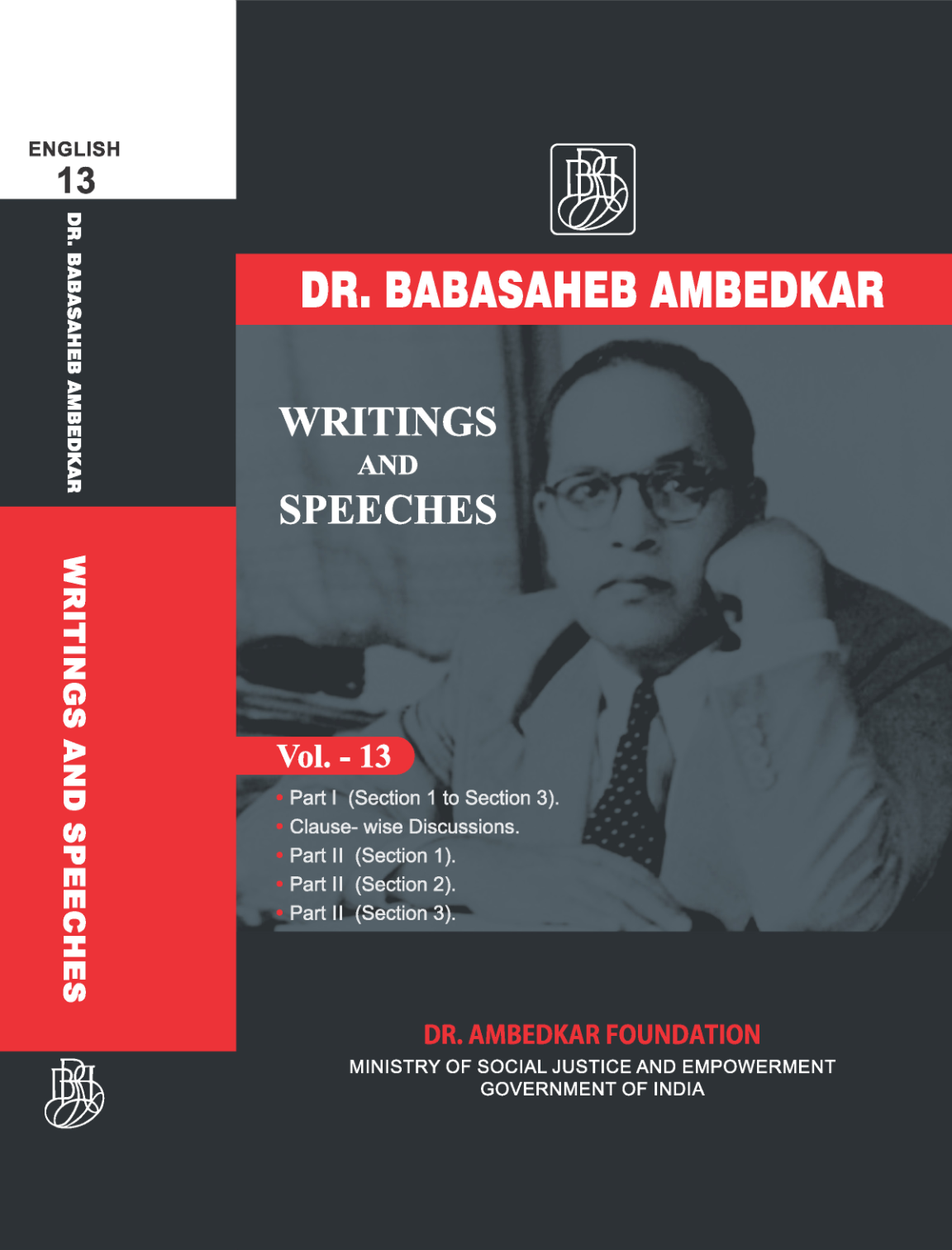
Volume 13 of Dr. Babasaheb Ambedkar: Writings and Speeches is dedicated to Ambedkar’s work on the Indian Constitution, reflecting his pivotal role as Chairman of the Drafting Committee of the Constituent Assembly (1946–1949). It documents his speeches, draft texts, amendments, and explanations as he piloted the Constitution through debates, making it one of the most historically important volumes in the series. The volume opens with Ambedkar’s resolutions, interim reports, and committee documents on fundamental rights, union structure, and constitutional functions. It includes the Draft Constitution of India (published in 1948), Ambedkar’s correspondence with Dr. Rajendra Prasad, and the clause-by-clause discussions in the Assembly. His responses to critics show his mastery of constitutional law, his democratic spirit, and his pragmatic approach to balancing unity with diversity. A large portion is devoted to Ambedkar’s explanations of specific articles: fundamental rights, directive principles, powers of Parliament, judiciary, emergency provisions, and federal-state relations. These discussions highlight his effort to reconcile liberty with equality, parliamentary sovereignty with judicial review, and central authority with state autonomy. Throughout the volume, Ambedkar’s intellectual rigor and democratic temperament shine. He defended minority rights while emphasizing national integration, insisted on constitutional morality, and repeatedly reminded the Assembly that a good constitution could only work if implemented in the right spirit. His colleagues praised him as the “principal architect of the Constitution,” with contemporaries like T.T. Krishnamachari and Rajendra Prasad acknowledging that the burden of drafting largely fell on his shoulders. The final sections include the adoption of the Constitution in 1949, along with tabular statements mapping how each draft clause evolved into a final article. Ambedkar’s speeches at the time reflect both his cautious optimism and his warnings: while he believed the Constitution was flexible and strong, he cautioned that its success depended on the morality and responsibility of those in power. Overall, Volume 13 captures Ambedkar not only as a jurist but also as a visionary democrat and nation-builder. It is the definitive record of his role in shaping the Constitution, embodying his ideals of justice, equality, and fraternity as the foundation of independent India.