

Comments
Highlight color
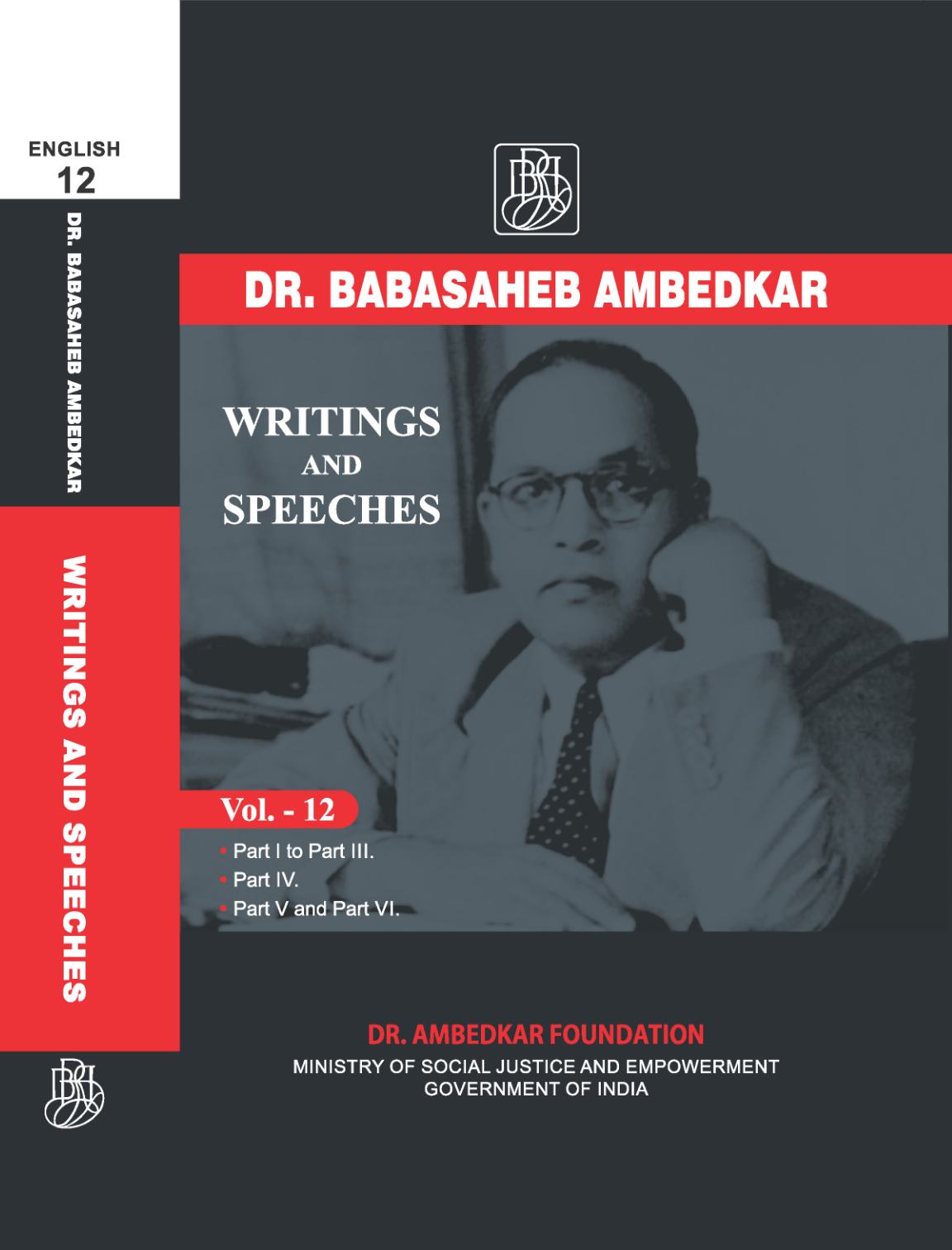
Volume 12 of Dr. Babasaheb Ambedkar: Writings and Speeches is a diverse collection that brings together Ambedkar’s historical, constitutional, and autobiographical writings. It highlights his role as a historian, political thinker, jurist, and critic of colonial and caste structures, offering a wide lens on his intellectual contributions. The first part includes “Ancient Indian Commerce” and “Commercial Relations of India in the Middle Ages”, where Ambedkar examines India’s early economic history and its ties with other regions, particularly in relation to the rise of Islam and European expansion. He argues that India was once a vibrant center of commerce, but internal social rigidities and external invasions eroded its economic strength. These writings showcase his belief that economic decline was tied to social stagnation. In the second part, “The Untouchables and the Pax Britannica”, Ambedkar analyzes the position of Dalits under British rule. He critically assesses whether colonialism alleviated or reinforced caste-based oppression, concluding that while the British introduced some reforms, they largely left traditional hierarchies intact. This section underscores his consistent theme: that social emancipation, not just political freedom, was the true measure of progress. The third part contains “Lectures on the English Constitution”, a series of detailed expositions on constitutional principles such as Parliament, the Crown, the House of Lords, and the privileges of legislators. Ambedkar’s engagement with the English system reflects his comparative approach, which later informed his own role in drafting the Indian Constitution. In the fourth part, Ambedkar provides legal and constitutional notes on subjects such as Common Law, Dominion Status, the Law of Specific Relief, and the Law of Trust. These writings reveal his deep grasp of jurisprudence and show how he adapted Western legal concepts to the Indian context. A particularly important feature of this volume is the inclusion of Ambedkar’s autobiographical essay “Waiting for a Visa”, a vivid personal account of caste discrimination he faced. Through stark experiences—such as being denied lodging, transport, or water—Ambedkar illustrates how untouchability pervaded every sphere of life. This text is one of the rare autobiographical glimpses into his personal struggles and forms a critical testimony of caste oppression in 20th-century India. Overall, Volume 12 demonstrates the breadth of Ambedkar’s scholarship—from history and economics to law, politics, and lived experience. It captures his effort to reinterpret India’s past, critique its present, and lay foundations for a just future. The combination of historical analysis, constitutional thought, and autobiography makes this volume a vital resource for understanding Ambedkar as both a thinker and a witness to the injustices he fought against.