

Comments
Highlight color
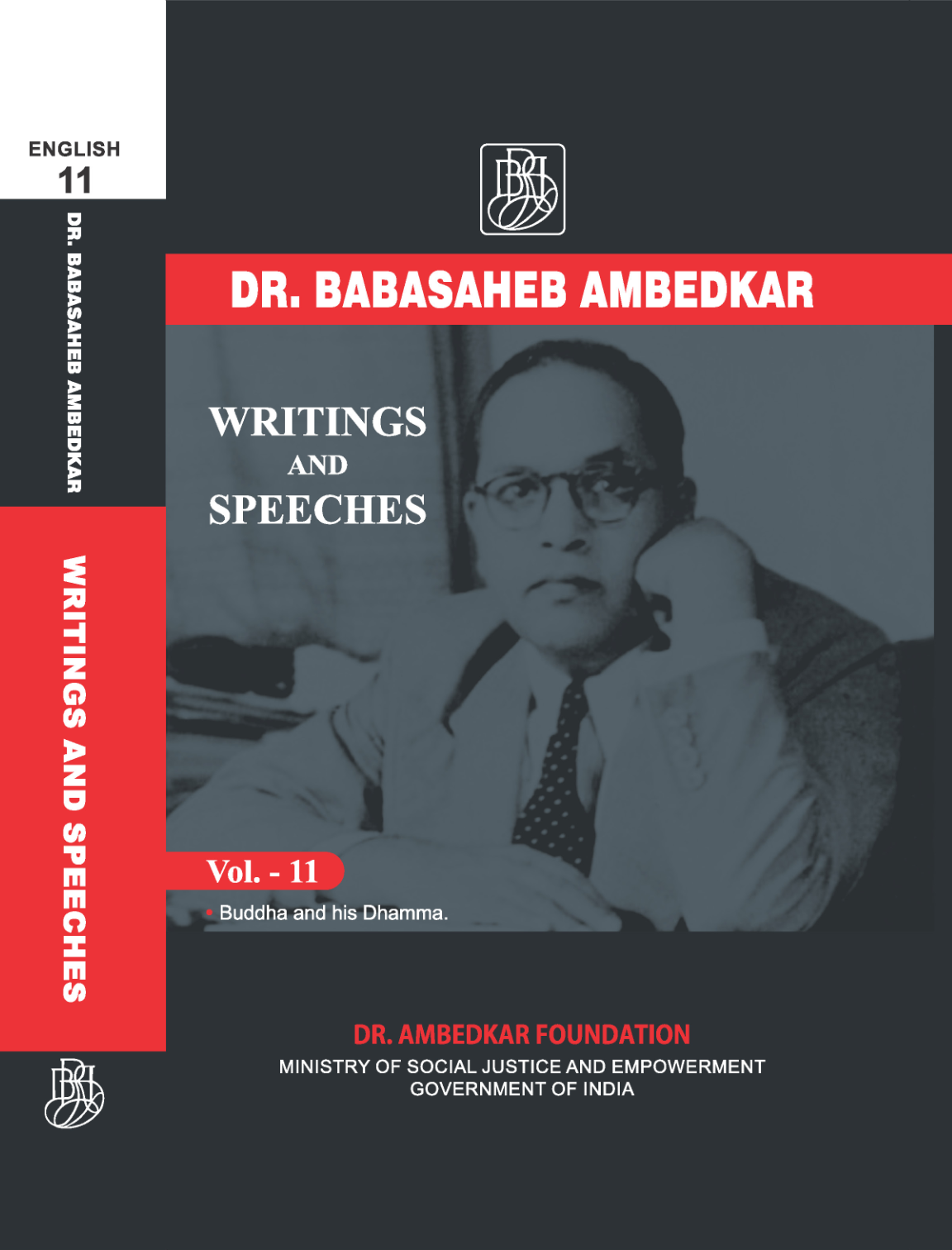
Volume 11 of Dr. Babasaheb Ambedkar: Writings and Speeches is dedicated to his final and most influential work, “The Buddha and His Dhamma”, which was published posthumously in 1957. This text serves as both a biography of the Buddha and a reinterpretation of Buddhism for modern India, and it became the spiritual foundation for the mass conversion of Dalits to Buddhism under Ambedkar’s leadership in 1956. The book is divided into eight main sections, tracing the life of the Buddha, his enlightenment, and the spread of his teachings. Ambedkar presents the Buddha not merely as a religious figure but as a rational reformer who rejected ritualism, caste hierarchy, and metaphysical speculation. Instead, the Buddha emphasized compassion, wisdom, and ethical living as the basis of social harmony. A central theme of the volume is Ambedkar’s distinction between Religion and Dhamma. He defines religion as often being rooted in dogma and rituals, whereas Dhamma is a code of righteous conduct that governs human relationships. For Ambedkar, the Buddha’s Dhamma represents liberty, equality, and fraternity, expressed through the principles of prajna (understanding) and karuna (compassion). The text also explains the Buddha’s views on conversion, morality, and social justice. Ambedkar stresses that Buddhism is not an otherworldly doctrine but a practical guide for creating a just society. He highlights how the Buddha accepted people from all castes and genders into his Sangha, breaking social barriers and offering a vision of equality. The epilogue gathers tributes from scholars and thinkers about the Buddha’s greatness and universal message. Ambedkar closes with a vow to spread the Dhamma, symbolizing both a personal and collective mission for his followers. Overall, Volume 11 is both a religious scripture and a manifesto of social transformation. It reflects Ambedkar’s intellectual journey from a critic of Hinduism to a Buddhist reformer, offering his followers a new ethical framework rooted in reason, equality, and compassion. The work remains the cornerstone of Navayana Buddhism, inspiring millions to seek dignity and liberation through the Buddha’s path.