

Comments
Highlight color
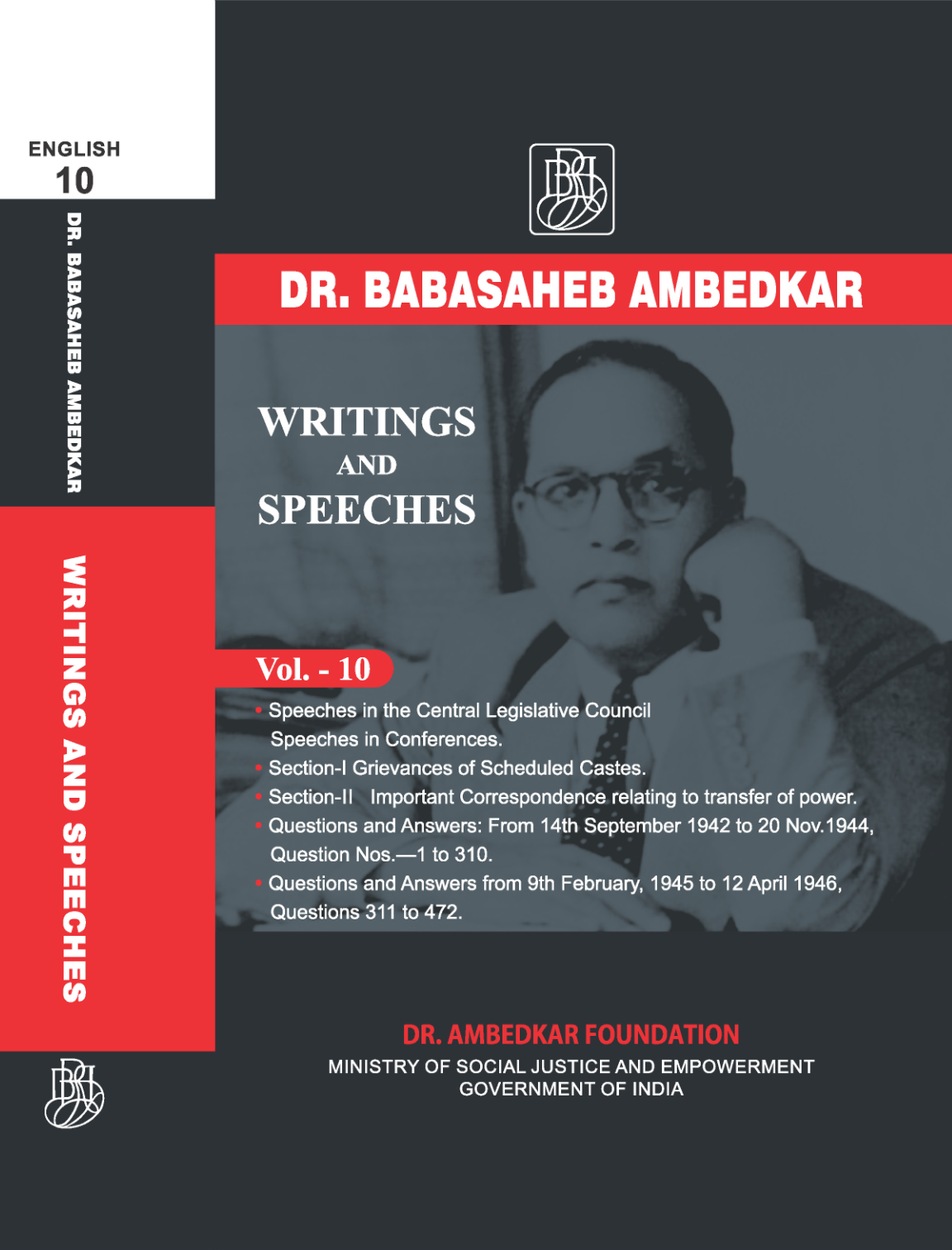
Volume 10 of Dr. Babasaheb Ambedkar: Writings and Speeches focuses on Ambedkar’s crucial period as a Labour Member of the Viceroy’s Executive Council (1942–1946), during the Second World War. This phase marked his direct role in governance, where he influenced labour laws, industrial relations, and economic policies at the highest level of the colonial administration. A large part of the volume consists of Ambedkar’s official speeches, legislative interventions, and policy statements. He introduced and supported laws concerning labour rights, working hours, maternity benefits, employment exchanges, apprenticeships, and compensation for war-related injuries. His interventions ensured that workers’ welfare became a serious concern for the government at a time when industrial labour was central to the war effort. Ambedkar also emphasized technical training and skill development for Scheduled Castes, proposing apprenticeship schemes in railway workshops, printing presses, and other government undertakings. His aim was not only to secure immediate labour protections but also to lay the foundation for long-term economic empowerment of marginalized communities. Another major theme of this volume is his criticism of governmental neglect of Scheduled Castes. In reviewing official documents like India and the Aggressor (1935–40), he strongly condemned the near-complete omission of Dalit struggles and pronouncements, arguing that this sidelining gave the impression that Scheduled Castes were politically insignificant. He called it a grave injustice at a decisive moment in India’s freedom movement. Beyond labour issues, Ambedkar used his position to reflect on nationalism, democracy, and communal questions. In his writings and broadcasts, he argued that nationalism should not come at the cost of democracy or social justice, and that labour’s true creed was internationalism, not narrow nationalism. His governance philosophy combined pragmatism with deep commitment to equality. Overall, Volume 10 highlights Ambedkar as a statesman and policy-maker, working within the colonial system yet pushing its boundaries to secure justice for workers and oppressed communities. It shows how he linked labour rights, economic democracy, and social equality while simultaneously critiquing the invisibilization of Dalits in official narratives. This volume captures his role not only as a leader of the marginalized but also as an architect of modern labour policy in India.